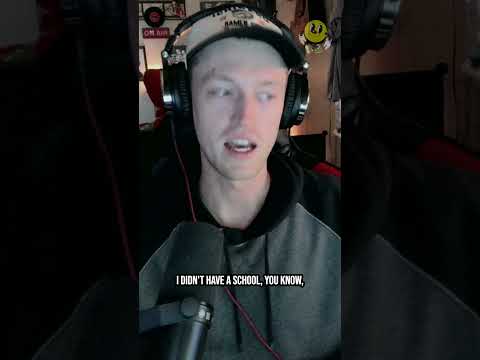
Why Success Doesn't Erase Homeschool Trauma
Ask about Ex-Homeschoolers Club
Episode Description
Grab a copy of Homeschooled by Stefan Merrill Block (affiliate link): https://bookshop.org/a/128680/9781335000989
This is a clip from my full conversation with Stefan Merrill Block. Check out the full interview here: https://youtu.be/zdQknrq7vE8
*Connect with Stefan* • Follow him on Instagram: https://www.instagram.com/stefanmblock/ • Check out his website: https://www.stefanmerrillblock.com
*Support the Show* • BuyMeACoffee: https://buymeacoffee.com/exhsclub • Subscribe on Patreon: https://www.patreon.com/cw/exhsclub • Check out our Substack: https://exhsclub.substack.com • Email Newsletter: https://exhsclub.beehiiv.com/
*Message Me On Socials* • Email me at [email protected] • Instagram: https://www.instagram.com/exhsclub/ • TikTok: https://www.tiktok.com/@exhsclub • Threads: https://www.threads.com/@exhsclub
*Listen on Podcast Players* • Spotify: https://open.spotify.com/show/1hIhpMeEy6VJuqNUwfz5TE • Apple Podcast: https://podcasts.apple.com/us/podcast/ex-homeschoolers-club/id1641525487 • iHeart: https://www.iheart.com/podcast/269-ex-homeschoolers-club-201877573
Read the full transcriptHide the full transcript
- I think there's two, there's two trains of thoughts when it comes to, like, the legacy that homeschooling, like, holds on each of us, right?
- Like, there's the scars, and then there's, like, the really good stuff, right? And
- Mm-hmm. course, like, you are a successful person. You've written a book. Like, you've, you've been on television.
- Like, you're, you're doing the thing. Like, you are a successful person for all intents and purposes.
- But there's also, like you were saying, those scars that just, like, with you for forever.
- And I think, you know, but we don't always see the balance of the, the two that people talk about.
- Like, as more and more people are coming forward to talk about their homeschool experiences, we hear, we hear one or the other.
- And so c- I'm curious. I don't totally know what this question is, but, like, I'm curious for you, like,
- how, how have you dealt with those scars? Are you still dealing with those scars?
- And then how do you, like, I guess to some extent, like, reconcile that with, like, you are a successful person in a lot of ways as well, so,
- like, you know, you're both, like, a homeschool success story and also a homeschool failure story in some ways.
- Yeah. I mean, I want to say, like, I do think, like, like homeschooling, you know, can be
- an extremely positive thing, and sometimes it's, you know, saves kids' lives. It's, you know, absolutely necessary.
- And I also, I also still believe that, you know, I, I mean, I think the way that my
- own mother did it was kind of haywire, but the idea of letting students' interests
- and curiosity kind of lead at least part of the path is, I think, an extremely exciting and productive one, and I, I wish that public schooling had more of it.
- Um, you know, and, and, and you're right. Like, I wouldn't, I wouldn't be a writer definitely without homeschool.
- I wouldn't have… Like, you know, if you ever-- anyone who's ever tried to write a book, like, one of the things that you learn right away is that, um,
- you know, it's all a confidence trick. Like, you, you write a draft, it doesn't feel good.
- You read the draft, it feels like shit, and you're like, "I, you know, maybe I can't do this." And I think what separates a writer from a non-writer
- is just, like, you have, like, somehow this confidence or this faith that you're gonna get there eventually.
- And I think that was partially born of this, like, extreme elevation that, of, of
- my childhood of like, you know, or maybe I am Shakespeare or maybe I'm Shakespeare.
- Um, but really not that, but, but, um, but the scars are, you know, are real too.
- And, and, um, you know, I, I think, like, that moment of, you know, going back into the world and, like, discovering that the sort of like central narrative
- of my childhood was false is a big one. Um, also, you know, you know, so, so I, I know that some people have, in hearing
- the more outlandish and, you know, borderline abusive things that happened to me in my homeschool time, um, have said, "Well, it, it can't be so bad.
- He's, you know, look at him. He's, he's published four books and he's, you know, here he is out in the world,
- like, talking like a normal person." Um, you know, I don't think that, you know, s-
- career success should at all be read as, like, the outcome of, of this situation.
- You know, or, or like, or as like a sign that it worked. Like, I think often-- and I, I have felt in my own life that my
- ambition, um, grew out of a need to transcend my past and to, like, get myself to safety on the other side.
- And so, like, I, I have felt… I mean, I don't feel this way now really, but for years and years, I felt like almost, like, deformed by ambition because I, I
- just was like, "I have to win everything. I have…" You know, a- and it wasn't competitive.
- It was like, if I'm not safely in th- this place where I'm like get, you know, where I know I can go to what- whatever graduate school or whatever, you know,
- uh, I know I'm gonna be published. Well, like, like, just, just feeling unsafe unless I succeeded, you
- know, on my own terms in a big way. Um, and that was, that was a pressure. And then, um, you know, I think when I went back to school, I, um… I mean,
- some people-- I just did an event last weekend and Um, the other, the, the readers were like, "You know, you seem, you seem normal," whatever that means.
- And I, I, I've heard that from people. I'm flattered that people think I'm normal.
- Um, but the thing that's… You know, I, I think I learned how to socialize, and I really, like, when I went back to school, I was, like, really taking notes
- on, like, how people relate to each other, um, in a sort of larger social scene.
- The thing that I still have struggled with, um, and, and still do on some level in my adulthood is friendship.
- You know, I, I think it's, like, natural for me as someone who, like, grew up in this extremely tiny, tight, claustrophobic household to, um, to
- be extremely close with my family. Like, I, I have two, I have two daughters and my wife and, like, I
- don't struggle, like, with closeness or commitment or anything with any of them.
- It's, it's this, like, sort of second level of, you know… I'm, like, I'm, like, good in, like, the general social sense.
- I'm good in the family sense. It's, it's the second level of, like, long-term committed friendships that
- I, um, I've had to, like, learn how they work and to remind myself to show up for them and, and, you know, I, it's just not, it's not natural.
- And, um, and I, I realize now, like, how, you know, how many friendships I've let lapse just sort of out of incompetence, you know?
- And, and, like, what that, what the loss of those friendships have, have meant to me.
- So it's, I have to be, like, much more aware of, of them, I think, and, um, and, and that is still with me
Brief Summary
Homeschooling has both positive impacts and lasting scars, affecting social skills and ambition in adulthood.
Key points
- The Duality of Homeschooling. Exploring the contrasting experiences of success and scars from homeschooling.
- The Pressure of Ambition. Discussing how ambition can stem from a need to transcend past experiences.
- Struggles with Friendship. Navigating the challenges of forming long-term friendships after a tight-knit upbringing.
Episode highlights
- The Duality of HomeschoolingExploring the contrasting experiences of success and scars from homeschooling.“You're both a homeschool success story and a failure story.”0:57Sep 25, 2026
- The Pressure of AmbitionDiscussing how ambition can stem from a need to transcend past experiences.“I felt almost deformed by ambition.”3:25Sep 25, 2026
- Struggles with FriendshipNavigating the challenges of forming long-term friendships after a tight-knit upbringing.“I've had to learn how friendships work.”5:02Sep 25, 2026