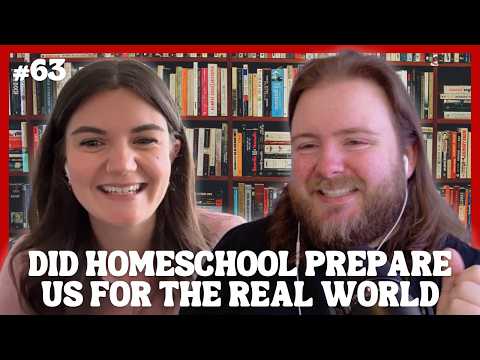
Leaving Evangelical Homeschool Culture Behind w/@UnReligiously
Ask about Ex-Homeschoolers Club
Episode Description
What happens when a homeschooled teenager raised in a deeply evangelical environment suddenly enters a community college classroom filled with new ideas, identities, and worldviews?
In this episode of The Ex-Homeschoolers Club, I'm sitting down with YouTuber Lauren Howe, creator of the Un•Religiously channel, to talk about growing up homeschooled in a highly religious environment and navigating the massive culture shock of entering public education and college. Lauren shares how her family originally started homeschooling due to learning challenges like ADHD, but over time became immersed in the evangelical homeschool culture of the early 2000s. She reflects on everything from joking that school buses were “prison buses” as a kid to grappling with evolution, gender identity, and even yoga classes for the first time in college.
The conversation explores both the benefits and drawbacks of homeschooling, the influence of homeschool culture beyond parents themselves, and the complicated process of reconciling faith with new perspectives.
*Chapters* 00:00 Sneak Peek 00:50 Welcome to the Ex-Homeschoolers Club 01:52 Lauren’s Background 04:09 Is Public School Really That Bad? 07:11 Homeschool Culture Influence 08:35 Homeschooling Pros and Cons 10:27 What Parents Did Well 11:51 Testing Out and Dual Enrollment 13:43 Transition and Socialization 17:03 Faith vs Evolution 20:45 Yoga and Moral Panic 22:48 Four Year College Next 24:18 Pop Culture Catch Up 26:59 College Culture Shock 27:53 Hiding Homeschool Roots 29:27 Spotting Fellow Homeschoolers 30:16 Unreligiously Channel Mission 33:06 Deconstruction First Dominoes 37:26 Fear Silence And Fallout 40:09 Seeing Prayer As Love 43:00 Catching Up On Pop Culture 45:20 Homeschooling X Factor 47:38 Advice For New Homeschoolers 51:51 Religious Liberty Commission Warning 53:26 Final Thanks And Wrap
If you enjoyed this conversation, be sure to subscribe, leave a review, and share it with a friend who might benefit from hearing this story. Follow Ex-Homeschoolers Club on Instagram and TikTok for updates, and send us a message – we’d love to hear from you!
Instagram: https://www.instagram.com/exhsclub/ TikTok: https://www.tiktok.com/@exhsclub Email me at [email protected]
Read the full transcriptHide the full transcript
- I remember as a young kid, you know, driving past the school and all the homeschool kids, we would joke like wave
- to the prisoners or like when kids were on a school bus, we would act like it was a jail bus. When I was
- homeschooling, they didn't really approach controversial topics. But once you go into community college, you are
- maybe more in depth covering evolution, then I'm feeling kind of this religious pull because I had done religious
- curriculum, religious schooling. Am I denying my faith or am I doing something wrong? There always is a little
- something that I can spot in other homeschoolers. And it's never a bad thing, but it always hurts a little bit
- when someone's like, "Are you homeschool?" Like, when people notice it in me, I'm like, "Uh, I haven't
- recovered as much as I thought." >> Well, Lauren, welcome to the Ex Homeschoolers Club. I'm so stoked to
- have you here. >> Thank you so much for having me. I'm really excited. >> We are kind of new new exhomie friends
- and um I appreciate so much you reached out to me via DM and and you do some really cool content stuff and so we were
- like talking about a way to collaborate and I was like okay well you got to come
- on the show and tell your homeschool story. So I'm just going to like hand it over to you for a few minutes. Tell me a
- little bit about your homeschool experience, where you grew up, siblings, you know, that kind of a thing. set the
- stage a little bit for us of like your homeschool experience. >> Yeah. Well, first I was really excited
- to find your channel because as the next homeschooler, I'm looking for content about people who homeschooled like me
- and there's not a lot of it out there, especially now the content about homeschooling has shifted a lot um after
- COVID, I think. So, it was really great to see that. And for anybody that knows my content, they'll definitely love your
- content and the exhomeschoolers club because it's right right in the same kind of vein as what I do. But my name
- is Lauren and I run a YouTube channel called Unreligiously where I talk about evangelicalism in the United States. I
- personally grew up very deep into the evangelical church. I homeschooled for most of my life, went to church four or
- five days a week. Um, yeah, just very very religious upbringing. So, I talk a lot about, yeah, just cultural
- commentary really on evangelicalism in the US. Um, I started homeschooling right out the gate, right in preschool.
- My family was not leaning towards homeschooling initially um because of religion or anything like that. they had
- put my older brother in public school and just with his ADHD and most of my siblings we have ADHD um they found that
- there were some struggles in the elementary school years. So their plan was to pull my brother out and me um
- when I entered school and just do that homeschooled and then we would go to public school um at some kind of I don't
- know unidentified time. Um but it went really really well. they felt like and my younger brother and my younger
- sister. I have three siblings, so all of us ended up homeschooling and they felt
- like it went really well. So, we just kept doing it. But we did always have the option to go to public school. So, I
- personally did choose to go to the local public school in 8th grade and then partially in 9th grade. And then I went
- back to homeschooling after that so that I could do more testing out of college classes and just more of a college path
- after that. It was a lot easier to do that through homeschooling than through the public high school system.
- >> What's really interesting about what you said there is like you kind of were also
- given a choice which I think like >> a lot of us didn't really get. I know that was a discussion that happened in
- my house around high school of like you know do you want to stick with this? it was working. So, it didn't
- >> also the high school I wanted to go to where any of my potential friends would
- have gone, I wasn't in that school district. So, I would I would have gone to a completely different high school.
- So, it became a really no-brainer for me to be like, I don't really want to go to
- public high school. But, that's so interesting that like it was a choice for you because I just feel like it's
- really not for most homeschoolers because >> I mean, I'm sure you ran into this or
- have run into this of like that messaging of like public school is bad and it's going to corrupt your kids. So
- like did that exist in your house and your parents were just like were willing to kind of like fight against that and
- like you know be a part of Lauren's education even if she does go to public school.
- >> Yeah. So I think when they started out they both had gone to public school. So
- when they started out homeschooling it really didn't have this religious backing but my family is religious
- right. Um, like I said, I grew up deep in the evangelical church. And there just so happens to be, and especially at
- the the time frame in the late 90s and early 2000s when we were homeschooling. There ended up being a lot of messaging
- around homeschooling saying that you need to pull your kids from school so that they don't fall into these evils or
- um really just that you don't let somebody else raise your kid. I hear that line a lot. Don't let the public
- school system raise your kid for you. Um, and that if you want godly children, you have to raise them up yourself. And
- so that messaging definitely did creep in over time. I remember as a young kid, you know, driving past a school and all
- the homeschool kids, we would joke like wave to the prisoners or like when kids were on a school bus, we would act like
- it was a jail bus. Um, which in hindsight is not funny, but we definitely did view school as,
- yeah, kind of a prison for children. like sitting in a class eight hours a day in indoctrination. I don't know if
- that's something that that necessarily my parents ever said to me. I don't think they would ever say that or if
- that was just more culturally what kind of came about. But by the time that I decided to home or to public school, I
- should say. Um I don't think they were thrilled about it. I don't think that it was like an equal option in their mind.
- I think that um they would have preferred that I had homeschooled because of kind of the cultural
- conversation at that time. Well, they were probably stoked when you were like, "Okay, I want back." Uh, yes. They want
- back into the the thing. You know what's interesting is like like you said, like
- it's not necessarily that your parents were sending the message of like, "Oh, that's indoctrination." Or anything like
- that because like my parents were the same way. I went to public school for a couple years. Um, I started
- homeschooling in second grade, did it all the way through. My sister >> kindergarten through through high school
- was homeschooled. Um, and so my parents never viewed public education as like I think truly evil or at least that was
- never the messaging we got, right? And so >> it's really the reason they pulled me
- out had to do more with the school systems in the area. They just were like the test scores are not where we want
- them to be. We think we can do better, yada yada yada. So it's it's interesting that like we didn't really get that
- messaging necessarily from our parents, but yet it still creeps in from like who
- is it? Like for me it was the other homeschool families. It just kind of that subliminal messaging. Was that kind
- of the same for you of like it was just other homeschool friends? >> Yes. I think it was other homeschool
- families maybe who didn't have the option to go to public school. They were I think public school was used as a
- threat in those families. If you're not behaving, you're not doing your school. That's kind of a cliche, but in my
- family, going to public school was never used as a threat. Um, but I think to these other kids it was like truly this
- is the bad thing that will happen to you if you don't succeed in homeschooling. And so there were these negative ideas
- about it. And then alongside that a lot of people who leave or start homeschooling and previously were in
- public school if they make that big life shift there a lot of times were problems
- with the public school that they went to. whether they were getting bullied and there wasn't really any way for them
- to work that out or they had, you know, ADHD like my brother and it just there wasn't enough staff to really
- accommodate all the kids. They didn't have a good experience while they were in public school. So, you're also
- hearing firsthand from these other elementary schoolers being like, "It was terrible. Everyone, you know, I don't
- know, was terrible." Basically. >> Yeah. Exactly. You do hear it's like a prison, right? Or it's like, like you
- said with the ADHD thing, it's like they couldn't they couldn't meet me where I was or there wasn't the the services.
- I've had multiple parents on here who talk about like their kid needs a service and the school just can't
- provide it. So what's the option? Well, let's just pull them out and do it at home cuz we can give that to them. And I
- think that's like a very it's an interesting place where we exist because I think that that's a valid
- >> thought, right, and a valid reason to do it. Um, I just had a public school teacher on recently and she was talking
- about the the need also for parents to go to like the schoolboard meetings and voice the fact that it's like we have
- kids in this district who need these services. How do we get them to them? What what do we need to do? Who do we
- need to elect? How do we need to allocate the money? Like let's do that thing so that we can provide those. Um,
- so it's a it's a very it's a complicated issue, right? It's like there's not really just a like one-sizefits-all
- band-aid that we can slap on this thing and be like, "Hey, everybody's happy and
- every problem is fixed." >> Yeah. And that's why I always will say to people, especially, you know, people,
- friends of mine that knew that I homeschooled and now they're thinking about homeschooling their kids, they'll
- come to me and I'm honest about what I think are the drawbacks of homeschooling for some people, but I'm also honest
- that for some kids, I think it can be a really great option. It can be a beautiful thing. It can definitely
- be the best educational option in some cases if you're doing it right. And that's why I think it's important that
- some of us older homeschoolers are having conversations like these so that we can tell parents, hey, maybe this
- isn't such a great way of doing it or maybe there are better options because I'm sure that you also have improvements
- that you could make if you were to ever homeschool your children. I think I had a good homeschool education, but if I
- were to ever homeschool children, I would make some changes. Um, and I think that new homesooled parents coming in,
- they want to do the right thing. These parents are not quitting their jobs and, you know, teaching their children at
- home full-time because they don't want to invest in their children. So, I think giving them the resources to actually do
- it well is just really, really important. Um, and we'll also make it more obvious when homeschooling isn't
- done well then because there will be kind of this standard of how it how it is done well. So what do you So in that
- kind of vein then like what is it that you think your parents did well in your schooling and then what did they not do
- so well? >> What they did really well was giving me autonomy over my education. I and again
- this is going to be different for every child. If you have a kid who doesn't like school at all and they're not
- motivated just saying do whatever you want might not actually be serving that child in the best way. But my family
- really gave me the opportunity to do what I wanted to do and to set really high goals for myself. So what I set as
- my goal was to graduate um with my two-year degree, my associates degree before I graduated high school because
- of the way that the college and high school graduation dates line up. Um and so I was able to do that by going back
- into the homeschool system. Whereas, if I would have stayed in the public school
- system, they actually only selected the top, I want to say two or three kids to be able to go to the college, whereas
- the colleg's rules are just that you have to be able to test in at a college level.
- >> Okay. >> Um, so I was able to test in at a college level and do that through homeschooling, whereas I was not in the
- top two students at the public school, so I wouldn't have been able to go do that. So, it really did save me a lot of
- money and give me a lot more exposure to other things. Um, and yeah, I think that
- was a huge positive that would not have been possible without homeschooling. Are
- we talking like kind of a dual enrollment situation where you're like, "Okay, I'm going to take math, science,
- whatever at the college." And that's also going to correspond and and translate to my high school education as
- well where you're taking it once or are you like, "Hey, I'm doing two separate classes that are this is high school and
- this is college level." So kind of a mixture of both just because of the nature of homeschooling I guess. Um I
- did throughout so I went through 8th grade and freshman year to public school and then after that I
- took like one art class at the public school right um to maintain connections there but otherwise I was testing out of
- classes. I was not going on campus. I was getting textbooks. It's called KIPP. >> It's college level
- >> entrance something. I don't know. But it's in Minnesota. It's called a KIPP. And you just read the textbook, go and
- take the test, and if you pass, you get the college credit. So, I was doing a mixture of that, homeschool classes, and
- then the public high school, one art class. Once I became a junior, then I was just full-time at the college, and
- that was that was dual enrollment. and I I stopped going to the public high school or doing homeschool classes on my
- own >> because I I did some club exams as well, right? It's like so I I'm I'm totally
- familiar with that and um that was like >> uh that saved me in college because I I
- ended up doing college in three years because I did summer school and then also had some club exams under my belt
- and that was a part of that. >> I had looked at doing the college high school thing and it was just a little
- bit too much for me. Um, >> and so yeah, but we had that dual enrollment thing was that was the piece
- that was too much. I could totally pick up a textbook and then go test out of something.
- >> But let's talk about that experience cuz I'm I obviously you had gone >> for a year, year and a half uh to a
- public school. So now transitioning, you're in high school and now you're going to a community college and a local
- college. How's that transition? Because like did you grow up with co-ops and existing in a space where like you had
- to be in a classroom setting at all or was it very like hey we're doing school at the dining room table kind of a thing
- like I I don't know socialization comes up a lot with homeschoolers right of like how we interact when we do get to
- like a college level we have to be in a classroom or at a job or anything like that. So was that difficult in high
- school to transition into like a college kind of class or was it fairly easy? The
- community college was a hard transition for me because when I was homeschooling and then even at the public school, they
- didn't really approach controversial topics. But once you go into community college, you are maybe more in depth
- covering evolution. Um whereas then I'm feeling kind of this religious pull because I had done religious curriculum,
- religious schooling primarily feeling am I denying my faith or am I doing something wrong? Um because there's also
- this comparison to public school as being an exposure to sin, an exposure to the world. So I really felt like maybe
- this is my test too, like maybe this is my exposure to that. So I I think I had a lot more of a culture shock and just
- realizing like a lot of these things are actually normal and it's okay to >> have different opinions. Yeah.
- >> Yeah. No, I think that's that's such an interesting thing because like >> my culture shock had less to do with
- with religion because I went to I went to a Christian college. So I and I picked that specifically because I was
- like I want the like the youth group feel. I want that like okay for the most part everybody I'm going to meet is
- going to believe very similar to me. Yeah. we're going to have our differences. But it's interesting
- because I remember my my sister went to uh a local community college and you know and she came home and she was
- like, "Oh yeah, like I'm in class with this this gay guy and and we're talking about this in class and like all these
- different things and I'm like I just can't it wasn't until I was out of college that I really I think felt the first
- major exposure to those things." So you're talking >> 21 years old, 22 years old. Like that's
- when that hit for me as opposed to like I mean you're talking 16 17 years old all of a sudden it's like yeah those are
- the big things that if you grew up religious we don't talk about these things we don't push these agendas we
- don't whatever and yeah there is that combating kind of like can I even read this textbook can I engage with this
- conversation like yeah let's talk a little bit about that because like I I'm wondering like
- I don't know if it's just the part of me that loves to play devil's advocate, but
- I have always I have always kind of been that person who like I just kind of like
- poking at people with the opposite of their opinion or viewpoint. >> Yeah. >> So maybe that wasn't quite as hard for
- me, but it was this denying of like my faith like when it came to abortion and and you know,
- >> gay marriage and evolution and stuff like that, like I liked picking the side
- of like pro those things. So, >> but I also felt kind of dirty about it. So, like, yeah.
- >> What was what was going through your head as you were sitting in science class and you're like, "Okay, we're
- studying evolution now. What am I supposed to do with this?" >> Yeah. I had kind of this
- >> like God's not dead moment. It was very immature, but I remember coming home and
- just being like, "We're talking about Earth science and I don't believe in evolution." I had grown up being taught
- creationism. I believed that the Earth was 6,000 years old. And so I knew I understood that this other viewpoint was
- out there, but writing the correct answers down felt like they were asking me to deny my faith, which they were
- not. Um, they were quizzing me on the textbook material whether I agreed with it or not. Right. But it was very
- Yeah, that was very difficult to me. I was kind of encouraged by the people around me to stand for my faith and not
- write the actual real answers like to write God as the answer or creation. I did not do that. I had I really
- struggled with it. I dealt with a lot of anxiety around it. Um and a lot of I'll
- give other examples too, but I really struggled with it and feeling like is it okay for me to do this? Is it okay that
- I'm in these environments? Um, another example, just like you were talking about having so many different kinds of
- people in one class. I went from being homeschooled to being a 16-year-old in the class and I learned what like being
- gender fluid was. This was in my sign language class and I remember that was like I had never heard of that before.
- This was back in like 2013 or 14, so no one really was talking about this stuff.
- And I remember just being like, yeah, is it even okay that I'm here, that I'm being exposed to this? Like, I just was
- really concerned about those things. And it came up in a lot of ways. You know, we also were of the type
- of Christianity that didn't believe in yoga. I didn't know that until I had signed up for a yoga course. And that
- was my gym credit. I couldn't kind of just get out of that. And so there were really weird mental gymnastics I was
- doing where, you know, my Christian friends were like, "We're going to pray for you and then while you're in yoga,
- just be praying the entire time so that you're not possessed by like the spiritual music that's playing or the
- positions that you're doing." And so that was kind of a a bit of a head game. And then even with art class, my intro
- to art class had a nude model. And um I was advised, which this is another thing
- I did not do, but they were going to have a man come in and be a nude artist. And I was kind of talking about my
- like moral concerns about going to that class with some some mentors of mine. And they encouraged me to look up
- pictures of infants so that when I go to this art class, I would never have to look up at the adult man and I could
- just draw infant genitalia, which is so much worse, so much grosser, weirder, >> wronger. Um, and so like I think there
- was a lot of confusion for me going in this environment where people were a lot more just accepting and liberal and
- trying these things and I had not seen anything like that. Everyone that I knew lived exactly like
- me. It was my only view of the world. But now in hindsight I credit a lot of those things or um like one of the
- programs run by the Muslim Student Association. I credit those types of things for really pushing me forward in
- life and opening my mind because I couldn't imagine without those experiences, you know, what kind of
- adult I would be now. Um, today, >> yeah, the yoga thing is so interesting because it it's reminding me of I I had
- a I was a dancer back in the day. I did swing and ballroom and English country, a lot of the weird homeschooly type
- stuff, but it was fun. It's fun. And it's, you know, um that was my mom's way of kind of being like, "Hey, Jacob's
- going to need to know how to talk to girls, so like let's put him in dance class." Um kind of a thing. And hey, it
- worked. So, um but anyway, but I had an I had a back injury from from a dance accident. And it was so funny because in
- therapy, they had me do yoga. And I remember not really thinking much of it at the time, but just kind of being
- like, "Okay, this is what the doctor's telling me to do." You know, whatever. It feels good. it helps, you know, it's
- taking the pain away. >> And I remember posting about it on Facebook or something about how these
- yoga stretches were like really helping me and the flood of comments of people being like that is demonic, that is
- evil, sinful, you need to repent and like all these things. And I was like, how can something that's helping me so
- much and something that not only I use, but like my parents were, you know, I was teaching them like, hey, here we do
- this and this will like open you up and all these different things. you know, we're all using this thing at my house
- and somehow this is evil and wicked and we've been deceived uh by that and so >> kind of along that same lines other
- gods. >> Exactly. I'm like I'm not sitting here, you know, praying to praying to the
- Buddha. I'm just like I'm just, you know, using my body and and being flexible and things like that. And so
- it's just funny because I I credit that with similar to you of like that was an eye opening experience where it was like
- >> I think the first time where I was like I really just don't believe that this is
- wrong like this this can't be a sinful thing like our bodies are designed to move and they are you know
- >> I don't know um I also just would put my always tell myself my own interpretation. I'm like what do you
- think Jesus did for 40 days in the wilderness? He probably did some yoga poses, you know, like I not just sitting
- there. >> Exactly. Like, um, so yeah. Well, let's Okay, so so now that we've gotten
- through high school, >> did we move on to like a four-year? Obviously, you would have transferred in
- probably in like a sophomore, junior year level, but did you go to college after after that?
- >> Yes. So, I didn't really know what I wanted to do um after I graduated high school, but I had my associates and
- everyone at the community college gave me really good advice. A lot of them were, you know, older adults, much older
- adults who were coming back to school and they just encouraged me like just go and get a degree and it doesn't matter
- what it was. And for me, that ended up being really good advice. I wasn't, you know, my dream is now to become like a
- doctor or something. So, I went and I just moved on and got a communications degree from a four-year college
- marketing degree. And that was honestly, I think because it was people my age, it
- was almost less of a culture shock. Um, because the community college, you know,
- we were there was just a lot of people at different life stages. So, I think I was exposed to more. So, I think it was
- actually almost easier going into the four-year college environment with a bunch of other 18-year-olds. And I also
- felt like that style of college felt more like co-op to me where you have class once a week.
- >> Um, then you're doing all your homework for the week. A lot of it is self-led,
- not all of it because you do have a teacher, but I I liked the scheduling in college a lot more than in high school
- um when you didn't have as much control. I'm wondering too because one of the things I realized when I got to college
- was some of the sheltering that had existed in my home school experience. So like there was a lot of pop music and
- just like pop culture in general that I had just kind of missed. And I wasn't totally like removed from everything.
- Like I did go to the movies. I was allowed to do that. I did listen to music and I knew who some pop stars were
- but just not everybody >> and that kind of a thing. But when I got to college, because I majored in music
- business, >> all of a sudden I had to play so much catchup of like who is Kanye West, you
- know. Um, which you know that like that was a big one. Um, I remember just like hours and hours listening to hiphop and
- rap and like learning all of the boy bands. I just posted about this on on one of my social medias about like I
- didn't know who like any of the boy bands were and like having to learn all of that one direction was like at the
- height of their popularity. like and I was like, "Okay, I need to know everything there is to know about these
- things." And so, was there anything like that in college where you're like, "Okay, I'm with my peers and yeah, I
- feel more comfortable and maybe that's less of a culture shock, but did you were you missing out on any of the pop
- cultury type stuff?" >> Yeah. Yeah, we missed out on a lot of that. I think I think my family used what is it
- called? It's not focus on the plugged in is maybe it's called. >> Yeah. Um, they use plugged in when we
- were younger to kind of screen what movies and books we would read. We weren't allowed to watch Pokemon or
- Power Rangers or whatever, you know, just kind of shows that certain Disney movies maybe that had too like much
- magic in them, stuff like that. And then as I got older, just a lot of the more pop like Twilight I wasn't allowed to
- watch. So, I do feel like even still into my adult life, um even just the other day I was out at dinner and there
- was like four movies. People were like, "Have you seen this?" And I'm like, "Just assume I haven't seen any of it."
- Um because we really didn't watch TV that often and then when we did it was pretty regulated, which I honestly think
- probably a net positive. I I don't think I would go so far um if I had my own kids in monitoring things or like do I
- need to read the book before my child reads it? Probably not. Um but I do also think with how prevalent stuff on the
- internet is right now. I do think that more parents could probably be doing more research into what their kids are
- consuming. So there is kind of I don't know this middle middle area to the extremes that I think is probably
- >> probably healthy. But definitely in college, I would say the the media, so the the music that I listened to, the mo
- movies that I had watched, shows I had watched, all of that was pretty limited. I didn't really know
- what people were talking about. And actually, it was to the point where my nickname for the first two, well, I went
- to college for three years because I added a minor at the end, but they nicknamed me Amish for the first two
- years. Um, and like there was kind of this running backstory that was a joke that I had escaped a cult and like was
- on my Rumspringer or whatever. And um, uh, someone gifted me once like an Amish romance novel because it just was so
- obvious to other people and you know, fortunately we all had good humor about it and they understood that it's like,
- yeah, Lauren's just not going to know. But I noticed that a lot more. Yeah. Yeah. When I went to college,
- >> that's funny. Yeah. Uh I fortunat I don't think I had any nicknames like that but I definitely one of the things
- >> a blessing probably >> a little bit. Yeah. But I I definitely one of the things that I did in college
- I was weirdly really kind of like embarrassed and ashamed of being a homeschooler. Like when I was at home I
- don't care but but that's all my friends were homeschooled. So it's like it didn't really matter. But in college I
- had kind of decided I moved across the country. I was moved from California to Illinois. I I had decided like this is
- my chance to reinvent myself. I get to be whoever I want to be at college. >> And so I had just made this decision
- that I was like, I'm not going to tell anybody I'm homeschooled. I'm just going to say I went to private school,
- >> really small, and I'm going to chalk it up to that. I can, you know, hide behind
- the religious aspect of like I am in a religious school. So like, you know, it's probably not going to be that
- strange that I haven't seen Harry Potter um or or listen to Kanye West, right? It's like just stuff like that. But I
- was like, I can kind of like duck behind some other things and probably get away
- with it. And what's so funny is I had a professor who really quickly pulled me into her office and she was like, "Yo,
- you got to like learn to chill." And I was like, "What do you mean?" And she's like, "You're just doing too much." I
- was like, "I don't even know what that means." And she's like, "You're just like you talk too much. You're like
- you're just like trying too hard to be like a normal kid." And she's like, "What? Why is that?" And I came clean
- with her and I was like, "I was homeschooled." and she's like, "Oh, okay. So, here's what we're going to do.
- Take a breath when you're with a group of people. Just like you got to just learn to hang." Like, that's the that
- was the thing. And I was like, "Okay." And so, once I get I think I figured it out fairly quickly. There's definitely
- still things that people pick up on that I'm like they're like, "Oh, yeah, that makes that makes sense." When it comes
- out that I'm homeschooled, they're like, "Oh, yeah, that definitely makes sense."
- There always is a little something that I can spot in other homeschoolers and it's never a bad thing but it always
- hurts a little bit when someone's like were you homeschooled like when people notice it in me I'm like uh I haven't
- recovered as much as I thought. >> Yeah. It's always just it's something subtle like I don't like it's it's a way
- we talk about something or like I Yeah. Like I like for me it's it's getting called out on like oh you haven't seen
- this thing. Typically, it's >> it's that trigger or saying like >> I I mean I didn't watch Harry Potter
- till I was an adult, right? So, it's like, you know, I don't have the connection to those movies that other
- people do and they're like, >> why is that? >> Well, I was a homeschool kid, guys. And
- they're like, oh, okay, this easily, you know, marks it off as as kind of the you're good. Well, I want to talk let's
- talk a little bit about kind of what you're doing now. So I mean you you mentioned about unreligiously and its
- commentary on Christianity as it sits today and the religious environment. >> I have kind of I would say binging
- probably most of your content. I've been going back through the archives and and
- you've got some really cool stuff in there around I mean a lot of topics that have been hit on in the show before, but
- like purity culture and deconstruction and those types of things. So tell me a little bit about like where where did
- you get the drive to kind of do that and then and then what are you doing over there and what's the mission?
- >> Yeah. Well, I feel like just growing up homeschooling and then with the religious background that I did, I have
- this cultural background almost that now we're very decentralized. We can't share
- with each other. So, I kind of hold it alone and I wanted to create something where I could connect with other people
- who either could relate to the homeschooling or the religious background that I grew up in. Um, we
- don't focus only on homeschooling. I definitely have talked a lot about homeschooling. I have videos about kind
- of comparing the experience of homeschooling to that of third culture kids, which is where they grow up in one
- country and then for their entire adult life, they move somewhere else. So, their adult culture is completely
- different than what they grew up in childhood. Um, doesn't really exist anymore for them. I have videos about
- that. Like you said, purity culture. Um, and I do a lot of deep dives on individual
- creators or couples, but I try not to snark on people. I try to really explain on both sides of you. maybe where the
- Christian viewpoint would be coming from. And then also what my viewpoint now would be as somebody who leans
- atheist, agnostic and um yeah, it's just not there anymore. But I don't have hard
- feelings either towards my upbringing. I don't think extremism is healthy in any
- form. So we talk about what what is healthy religion, what is not healthy religion and kind of all of its forms in
- America. Recently too, I would say specifically Christian nationalism is a big topic. Um, the religious liberty
- commission is operating right now. It's set for a year period and they're a little bit over halfway through. And
- part of the religious liberty commission is talking about education and what's going to be happening for the future of
- education. Homeschooling is a part of that. So, I have videos about that and just things that would kind of impact
- people who grew up like us um impact their kind of their worlds. >> Yeah. No. And I highly encourage my
- audience like if any of this is interesting to you, definitely it's going to be linked down below. If you're
- watching on video, it's popping up somewhere on the screen probably as well. But unreligiously is Lauren's
- channel. Go deep dive over there. I'm curious a little bit because I'm also deconstructed Christian. And so if you
- don't mind like talk a little bit about that process for you because it's what's
- so interesting is there was a long time for me where I felt like it started in college and then I was like no it
- started when I was like 22 23 I was out of college kind of a thing but more recently I have really started to
- realize that my deconstruction started all the way back like in high school. And
- >> so anyway, I'm going to I'm going to turn over to you, but like tell me a little bit about like your
- deconstruction journey of like where does it start? What was kind of the the first domino to fall in a lot of senses
- where you're like, "Okay, something's not adding up here." >> Yeah. Well, so I I mean, I was always a
- Christian. I gave my heart to Jesus when I was 5 years old. Um and I didn't really question it. All of my friends
- were Christians. Um grew up homeschooling like we've talked about. So, we were kind of in that bubble where
- there wasn't a lot of other viewpoints. But I do think that then once I went to public school and then community
- college, I was starting to grapple with these questions a lot more, thinking about things like, can I write this
- answer on my test? And if not, why does God care that like God knows that I really believe that the earth is 6,000
- years old, so why does God care if I'm writing the correct answer down on a test to get the the right points or why
- does God care if I'm stretching to help my physical injury? I think I just had a
- lot more of these, not I don't even want to say they're like deep theological questions, but really these practical
- life questions about religion coming up for me. And then there also was a lot of
- pressure on me at my church. Um, we I think because we were homeschooled and a lot of other people were homeschooled,
- they would use the kids to set up and tear down because we were a church plant. We didn't have a permanent
- building. Yeah. >> So, like on youth group days, we'd be getting there at 3:00 and wouldn't be
- leaving till 10:00 because we'd be setting up and tearing down. And they had like another homeschooler learn to
- code and she did the website for everything for the church. like we just were very we were worked very hard. I think
- um my my little brother is another example. He was like not even old enough to be in youth group and they had him
- actually running the worship team for a youth group with kids older than him because again it's just like when you're
- homeschooled people think you have a lot of free time which in some cases you might but you know it it was a lot of
- pressure. So that all really led to my deconstruction. and I had to start really thinking about these topics,
- thinking about is it worth it for me to stay. Um, but I didn't actually stop believing in God until I was probably 24
- or 25 years old. I would say I it really took me a long time to even admit to myself really basic things like I don't
- believe in hell anymore. it. I I remember not believing in hell for a few years before I could even tell my
- childhood best friend who had also deconstructed. Um because I was so scared that I don't even know that if I
- spoke it out loud that then I would go to hell or I could be leading my friends astray and down the wrong path because
- of my own unbelief. And so there was just a lot of fear and silence wrapped up in it. But the funny part is that now
- that I have deconstructed and I've talked more openly with my friends about it, obviously I have my
- YouTube channel so people know it. It come, you know, come to find out that a lot of people actually were going
- through the same process as me on basically the same timeline as me, but none of us felt comfortable enough to
- talk about it with each other. Um, so that's kind of really the the events that led to my deconstruction. It's not
- anything massive. It's just this anxiety in real life kind of pushing against my
- faith, I think. But yeah, now I I still have a positive view of religion in general. I think that you can do
- religion in a very healthy way. But I do think that how I grew up with evangelicalism
- specifically in America, um, which is kind of the the denomination credited with Christian nationalism, I think that
- they have become very legalistic in a lot of ways and may may not be the most healthy thing for most people.
- >> One of the things that really struck me with what you just said was like the not
- even wanting to tell your like your friends. like >> that was that was difficult for me too
- because >> growing up one in the home school community but two in the church community it's very much like those are
- your people that is your world for a lot of it and so even at 24 to come out and say like I don't buy
- into this anymore is like scary because all of a sudden like those people for me
- were still my friends they were still my connection um to that world. And so there is that like am I just going to be
- cut out of all of this because I've seen that happen. >> Yeah. And so there is kind of that like
- do I am I ready to let go of that? Because that's what it is to to really publicly say it out loud. And even like
- telling my parents like that was just terrifying because >> I know friends who who are are gay or
- gender fluid and like when they came out like their parents were like kick them out of the house, get out of here kind
- of a thing. And I was like >> not that my I mean I was on my own. I lived on my own like but it just
- >> there was that fear in me of like is this it? like is this the end of my relationship with these people? And so
- >> yeah, >> but come to find out, as soon as you talk about it, then other people feel
- the confidence, right, to be like, oh yeah, like I I'm in the same boat as you, right? And you're like, holy crap,
- like >> what? Like why have we not been talking about this for four years, you know?
- Like we've been kind of going back and forth with these questions for a while now. And so I don't know about you, but
- like I definitely feel so much more confident in talking about those things with with people even who are still in
- it because I'm just like >> I just don't think it's a valid enough reason for you to cut me out of your
- life and I'm not going to cut you out of my life just because you believe something different than me.
- >> Yeah, I would completely agree with that. I will say one thing that has been hard. I have dealt with people cutting
- me off because I no longer am a Christian. Although that hasn't been the primary response from people. I think
- the primary response has been people being like deeply disturbed on my behalf. >> Yeah. And then they'll, you know,
- they've let me know multiple people, this isn't one person, that they're praying for me daily for my salvation.
- And so I think for me too, I've gotten a lot better about being open about it, but it's also still hard in some ways
- because it feels like causing people unnecessary pain or it feels like by being honest that then you're burdening
- them with this like this the weight of your soul. I don't know if that's something that you experienced with your
- family at all. >> Yeah, I I definitely did. It's it's really funny because so in college I
- took a religions class and one of the the goals of that class was we went and looked at a lot of different church
- denominations. So I grew up going to Baptist church. Then I went to a non-denominational church that had a lot
- of ties to Calvary Chapel. So very similar in that vein. >> And then I went to a school that was a
- uh free Methodist school. So anyway, but the professor his his goal was, hey, we're going to go to all these different
- things. So, we went to Catholic mass and then we did free Methodist and we did a
- Baptist church and but we also went to a Jewish synagogue and we also went to uh
- an Islamic mosque and that was so eye opening because I wanted to go in there and be very
- combative. Um because that's just kind of what you're trained to do, right? Like
- >> defend the faith. >> Yeah. The Jews and the Muslims, they don't believe the same thing we do. Um
- the Jews are a little bit closer, but they just don't have the full picture yet. Um
- but so I wanted to be combative and there were definitely people on that trip who were very combative and for
- whatever reason when we got there I just was like you know what I'm just going to
- hear these people out. >> Yeah. >> And specifically at the mosque the the leader there he was like the thing with
- religion is that the reason that we want to minister and evangelize to each other
- is because we love each other and because we want to see each other in the afterlife. That's the goal. That's the
- whole reason. And so it shifted my view of like when people do say the things of
- like I'm praying for you or you know I'm praying for your salvation. I understand
- that it comes from a place of love. >> Yeah. >> It's a little twisted and it's not
- always the greatest and you know sometimes you kind of have this tough conversations with people of like hey
- like this feels really weird. I I don't love that you do this for me or I I just
- don't want to talk about it like that. But that's but if if hopefully they're open enough and willing enough, this is
- not always the case, but if they are, there are a lot of times that those people are willing to hear you out and
- say like they are not necessarily trying to cause discomfort in your life. And in
- the same way, I don't want to cause discomfort in their life of them being worried about my religious anything. I
- can't control whether they do or not, but like >> at the end of the day, like >> I'm good. I'm happy. I'm I'm living my
- life. I'm enjoying it. and I'm open and I'm willing to have those conversations with you. I'm not
- going to cut you out and I'm not going to cut you off just because you want to talk about those things.
- >> Yeah, >> that's just where I exist now. It's this gray nebulous zone and I'm cool with
- that and like >> hopefully you can be too. um >> that that's kind of the place I exist
- right now and and it's >> it works for some but same point as you I mean I've lost a couple friends and
- people along the way that are just kind of like I can't they can't ride with that and I'm like you know what all good
- you go do you focus on you that's fine have you since you have entered adulthood left Christian college as well
- have you tried to catch up at all on any of the media any of the movies have you
- watched Harry Potter Yes, absolutely. Um, Harry Potter is now like Yeah, I bought them for I think my
- birthday this past year. I was like, I got to have the fan. >> Yeah. No, I'm a fan. And what's funny is
- now I've like um I got my parents to watch them. So like they're fans now. Like there's definitely what's been cool
- about I think me deconstructing is even like even though a lot of my family is still religious,
- >> there are areas that they are willing to kind of loosen up some of the reins around the things that were so tight
- when we were kids. Because I think you had mentioned this earlier, parents don't necessarily want bad
- things for their kids. They want their kids to grow up in a safe, loving environment. They want to protect them
- from the evils of the world and they're kind of just trying the best they can. Sometimes they get really bad advice and
- they just roll with it. And it's not until years later that they realize like that was bad advice and I it didn't
- really matter. We could have watched Harry Potter and then had a conversation around why
- >> magic isn't real or this is witchcraft or whatever. >> Yeah, >> we could have done that. we didn't
- because that would that was the harder option as opposed to just being like, "Nope, we're not watching that."
- >> And so I think that's been really helpful is I have a lot of people in my life that are again willing to have that
- conversation of like, yeah, we screwed up with this thing and we're we're going to own that, but now let's like be
- willing to like embrace something new and see does it align with my beliefs or not. And I keep reminding people who are
- religious still, I'm like, if you still believe, then you also have the power of
- God on your side. >> Yeah. >> And if you read the Bible, Jesus didn't shy away from the people who disagreed with
- him. He went right into the action. He went right into the conversation and all those types of things. And so I I try to
- push them to do that same thing. It's like engage with the thing that you're against so that you understand what it
- is before you really pass judgment on it. And so yeah, that's me I guess being really
- preachy now. But >> no, I think that's really relatable and it I don't know something that strikes
- me about watching your videos and then just from our conversation conversations that we've had together is that you grew
- up in California. I grew up in Minnesota and we homeschooled in very different areas. We grew up in different churches,
- um, different denominations, but there still are so many similarities to the culture of homeschooling. This un, I
- don't know, unidentifiable thing that makes it so we can tell who the other homeschoolers are. Like, it is still the
- same, which is really interesting to me. And I wanted to know if you have any theories why that is.
- >> Oh, man. I can't figure it out to be honest. that's been like >> that that came up I think like literally
- one of my like >> early episodes was a buddy of mine we were talking about like he's been around the world he's
- he's a missionary and he he is like he's like I was in Thailand and I ran into people and like just instantly knew that
- they were like a homeschool family kind of a thing and I think that's like what's so it needs to be studied at some
- point because like what is that magic thing about the homeschool world that Like is it a is it a smell? Is it a
- hormone? Is it a look? Like what is that thing that makes it that way? Because even like
- like you said like we grew up thousands of miles apart from each other. >> Yes. >> Very different but also like very
- similar. And so also what is shaping and making those things that has been a recent thing for me where I'm starting
- to realize I'm like okay like we got to start studying like how is it that like you know this family
- in Minnesota this family in California have other people friends in New Jersey like we all like kind of same timeline
- very similar upbringing h >> how why is that what is that thing that is driving that
- that piece so I don't have an answer for you But >> it's interesting to think about um I
- yeah I've had this conversation with other homeschoolers as well and yeah it's definitely like a well-known the
- the X factor. It's like a well-known thing but it's yeah nobody has been able to
- >> put their finger on it. So, >> I'm curious. Um, you kind of touched on it a little bit earlier, but like with
- this next generation of homeschooling that's coming, I think CO taught a lot of people a lot of things, right? That,
- you know, school could come into the house and people could survive and some people were like, hey, let's like let's
- make this the permanent thing. >> Um, and so there definitely is this kind of major uptick right now in
- homeschooling. And so when you have friends who are coming to you or just random people who are like, "Hey, I'm
- thinking about doing this, but I don't want to mess it up." What is what is I guess like the major thing that you're
- like, "Hey, look at this first to decide whether you really want to do this." >> What I normally say to people is to ask
- themselves if they're doing it to expand the kids' world or to kind of reduce the
- kids world. Because I think there are parents who homeschool because they want to maybe overprotect. They want to
- limit what their child is exposed to in a way that I think does ultimately hurt kids once they enter adulthood. Um I
- don't think that you should be limiting access to a quality well-rounded education, knowing that, you know,
- evolution is a theory, things like that. that. So, I think if you're pulling your
- kid out of school so that they have less in their world, I think that is maybe something that you should reconsider.
- But if you're doing it to give them more because your kid has a learning disability and you can give them a
- better education at home or for me, I was able to do PSO and get my two-year college degree and save a lot of money.
- You know, I my world was opened broader in the end, I think, because of homeschooling. And so I just ask people
- to kind of ask themselves that question because the narratives around homeschooling right now are different
- than they were when we grew up, but they're still almost entirely fear-based. And that's not to say that
- they're not legitimate. It is definitely situation to situation in what area school you're going to, what resources
- are available. Um, but in a lot of cases, um, the people that I see homeschooling for religious reasons, for
- example, they they kind of want to shrink down the community, shrink down what their kid has access to, um, and
- all of that. I don't know if that makes sense, but that's kind of what I direct people to is just what's your motivation
- behind it. Um, and then always be willing to change because homeschooling is not going to work for every kid. Um,
- I have three siblings. Two of us opted to do public school, two opted not to. Um, and we definitely all learned very
- differently and got very different things and experiences out of homeschooling. So, yeah, just being
- flexible with yourself, too. If you know it doesn't go well, that that's not a failure is you being a home or in you
- being a homeschool parent. Just like if public school doesn't work out, it's not
- a necessarily a failure on the school. >> No, I I totally agree with you. That's
- something that I've come to realize and like I still I mean it's something I say
- a lot on this show of like you got to find the right fit for your kid. I know that like who I am as a person, I
- benefited from homeschooling. I would have been fine in public school. I I just I really would have the way my
- brain works, the way that I operate as a human being, I would have been fine. My
- sister, I I think homeschooling was the best option for her. Um I think she would have needed maybe a different type
- of school. But like >> that's that's the thing is it's like my parents were willing to kind of try an
- experiment with us to to figure out the things that worked and didn't work. And so it was never a consistent thing. It
- was always >> an experiment and a test to see is this program working? Is this home is this
- curriculum working? Are these co-ops working? Are these friends working? Yes. No. If they weren't like we're moving
- on, we're going to the next thing. And so >> that is again to your point of just like
- it is a current it is a continual optimization to figure out what works best for for kids and in the education
- world and hopefully it's to expand because yeah I think that's that's my biggest piece. I I talked about three
- previously on a previous episode I talked about three things that I want to see different. The expansion piece is
- one of those of just like let's cover so much more than we did in the little bubble that I existed in. So
- >> yes. Anyway, Lauren, is there anything else we haven't touched on that you feel
- is important? Whether it's homeschool related, religion, ex religion, anything else, um, before I let you go,
- >> well, I just am warning people right now about the religious liberty commission.
- I think it's going to make really big changes when it comes to education and not just for homeschoolers. It's going
- to make a big difference when it comes to public or sorry, private education, um, online schooling, funding for
- schools. It's going to make a big difference in a lot of things. So, I think it's worth paying attention to and
- for anybody who watches this, I would just encourage you to t take a look into what is being done right now because no
- matter what you choose to do with your kids schooling in the future, this this will impact it.
- >> Yeah. No, that's that's a huge that's a huge one. You brought that up when we
- chatted previously and I started looking into it >> because of that. And something um again
- on a recent episode I had a public school teacher on the biggest piece of advice that she gave for someone like
- myself who I'm not planning on having kids. I don't currently have kids but it is one of those things where I still get
- a vote on who runs the school programs. And so being educated on those things and talking to people who who do have
- kids and and understanding how all of that's operating like as a whole, I think it's a net positive that we have
- well educated kids, we got smart kids and we give them the resources they need, right? So those things are
- important to me just as a human being and that's what I want to see my tax money go towards. So educate yourself
- people that I'm going to link that down below too so that people can easily find
- it. But yeah, go go research that. Lauren, this has been so much fun. I appreciate you coming on.
- >> Thank you so much for having me. >> Of course. Of course. And uh to the audience, of course, it has been the
- Xomeschoolers club. I hope you enjoyed. If you enjoyed, leave a comment. Let me know your favorite part. If you got any
- other questions for Lauren, maybe we'll have her on do another another part. Be sure to go check out her channel and
- what she's doing over there. And until next time, we'll see you. Peace.
Brief Summary
Lauren discusses her evangelical homeschooling experience, cultural shocks in public education, and her journey of deconstructing her faith.
Key points
- Welcome to the Ex Homeschoolers Club. Lauren shares her journey from homeschooling to community college, navigating faith and education.
- The Choice of Education. Lauren discusses the choice between homeschooling and public school, reflecting on her upbringing.
- The Drawbacks of Homeschooling. Lauren candidly discusses the drawbacks of homeschooling and the importance of resources.
- Cultural Shock in College. Lauren experiences a culture shock when exposed to new ideas at community college.
- Yoga and Spirituality. Debating the morality of yoga and its perceived spiritual implications within faith.
- Deconstructing Beliefs. Reflecting on the journey of questioning long-held beliefs after exposure to new ideas.
Episode highlights
- Welcome to the Ex Homeschoolers ClubLauren shares her journey from homeschooling to community college, navigating faith and education.“I'm really excited to be here.”0:57Mar 6, 2026
- The Choice of EducationLauren discusses the choice between homeschooling and public school, reflecting on her upbringing.“It became a really no-brainer for me.”4:07Mar 6, 2026
- The Drawbacks of HomeschoolingLauren candidly discusses the drawbacks of homeschooling and the importance of resources.“I think it can be a really great option.”9:32Mar 6, 2026
- Cultural Shock in CollegeLauren experiences a culture shock when exposed to new ideas at community college.“I was feeling kind of this religious pull.”14:45Mar 6, 2026
- Yoga and SpiritualityDebating the morality of yoga and its perceived spiritual implications within faith.“How can something that’s helping me be evil?”21:44Mar 6, 2026
- Deconstructing BeliefsReflecting on the journey of questioning long-held beliefs after exposure to new ideas.“I really just don’t believe that this is wrong.”22:26Mar 6, 2026
- The Homeschool ExperienceNavigating the challenges of being a homeschooler in a college environment.“I was like, "I was homeschooled."”29:03Mar 6, 2026
- Fear of UnbeliefThe fear of expressing doubts about faith can be paralyzing. 'I was so scared that if I spoke it out loud, I would go to hell.'“I was so scared that if I spoke it out loud, I would go to hell.”36:11Mar 6, 2026