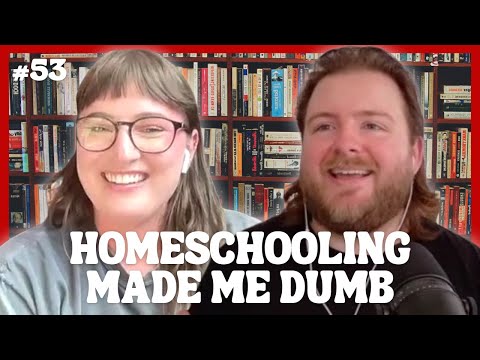
What Happens When Homeschooling Leads to Burnout Instead of Brilliance? | #36
Ask about Ex-Homeschoolers Club
Episode Description
Join the Newsletter for the latest Ex-Homeschooler News: https://exhsclub.beehiiv.com/subscribe
On today's show I'm joined by Mia Brooks, a longtime family friend. We dive into Mia's unique homeschool upbringing as the youngest of several siblings, her early leap into community college at age 14, and her reflective journey as a neurodivergent adult. From a less structured homeschool experience to discovering her ADHD as an adult, Mia shares candidly about burnout, creativity, and finding her voice through music.
If you're a former homeschooler navigating adulthood, neurodivergency, or the creative grind, this one's for you. We discuss everything from educational gaps to emotional growth, and how embracing one's uniqueness can unlock surprising paths.
*Key Takeaways:* - Mia's flexible homeschool education fostered independence but masked underlying struggles. - Community college at 14 gave Mia early access to higher learning but came with social culture shock. - Getting diagnosed with ADHD as an adult reframed many of Mia's childhood behaviors and coping methods. - Burnout and shame were lingering effects from trying to "overachieve" in a neurotypical world. - Today, Mia channels her experience into music, releasing indie work under the name @babimanatee
*Check out Mia's Music Here:* - Spotify: https://open.spotify.com/artist/0ObF6Vylh7jUtpMeRx7GXr?si=5OS23T24SkS8SYdG5WygPg - Instagram: https://www.instagram.com/babimanatee/
*Timestamps* 00:00 Welcome to the Ex Homeschoolers Club 01:13 A Day in the Life of Mia Brooks 02:58 Homeschooling vs. Public Schooling 05:21 Early College Experience 16:05 Graduating Early and Future Plans 22:58 Discovering Neurodivergence 30:04 Childhood Memories and Dramatic Moments 30:57 Understanding Emotions and Therapy 32:30 Stigma and Neurodivergency 35:13 Coping Mechanisms and Self-Discovery 36:50 Homeschooling Experiences and Reflections 50:16 Music Career and Creative Journey 55:28 Final Thoughts and Farewell
If this episode resonated with you, hit that subscribe button, leave a review, and share this episode with a friend who grew up outside the box. Want more behind-the-scenes content? Sign up for my free newsletter—link in the show notes below. And don’t forget to stream Mia's album and follow her musical journey as Babi Manatee!
Instagram: https://www.instagram.com/exhsclub/ TikTok: https://www.tiktok.com/@exhsclub Email me at [email protected]
Read the full transcriptHide the full transcript
- All right, Mia, we're here. Welcome to the Exhomeschoolers Club. Hi. Thank you for having me. Uh, it is it is a
- pleasure to have you. Oh my gosh, it has been we were talking before we hit record. It has been a number of years
- since I've seen you. You for for audience members who don't know, you are the younger sister of Derry, who was
- like my third interview on this or my third episode on this podcast and like my best friend growing up. Um, and then
- your mom has also been on the podcast and uh, and now I get to talk to you and I'm so stoked because I we haven't
- talked in like a decade. So, I'm I'm pumped to get your experience. Yeah, it's super cool to be here. I love
- it's really cool to see the like very very varied experiences from people where I'm like I thought I had a pretty
- similar experience to certain people but then I hear their point of view and I'm
- like oh we had an entirely different like experience with this. Yeah. No, that's been the coolest part about this
- show is like getting to chat with all of you and and learning about all these like behind the-scen things that were
- happening and how they shape like whether you think of it as like good or bad or like just overall your
- experience. So, so with that, I'm going to turn it over to you for a few minutes
- and kind of walk me through like a day in the life of Beia Brooks growing up in the Brooks household of like what was a
- day in the life of homeschool looking like? Well, I feel like for if you asked any of my other siblings, like each of
- us would have a very different telling of it, I think, because most we're I think about each
- like two or to three years apart. So, kind of each of us had a different like era of parenting. Yeah. Um definitely my
- older siblings experiences were very different from mine. Um, but our homeschooling was a little bit less
- structured than a lot of the people in our like homeschooling community that I knew. Um, I know a lot of kids had like
- certain programs or like a certain curriculum that they like did everything from one. I know my mom talked about
- that a little bit already. Um, but we kind of switched between stuff a lot and so my older siblings had
- certain curriculums that like by the time it got to me where I was taking that subject, it was like we're not
- using that anymore. Yeah. Um, it but it was very um self-paced. I think because I'm the
- youngest, I kind of got kind of the less structured like the we're almost done. we just got to finish with this last
- kid. Kind of a little bit less structured stuff. Um which I think kind of worked to my advantage. I was very um
- kind of just like show me how to do something and I'm going to get it done so I can be done with it. Yeah, exactly.
- It's kind of that whole like mentality. I just interviewed someone earlier this week who was talking about they did a
- semester in high school back in like a private or public school and they were talking about how they were like it was
- it wasn't that the teaching was bad but the the waste of time they're like I could have done everything that I needed
- to do for the day in two to three hours and so I felt just like trapped in this space and I wanted to like go play
- sports and I wanted to go do other stuff and I think that can it can be one of the strengths of homeschooling is that
- ability right to kind of be like, I set my own pace. Yeah. So, yeah, mom and dad
- hand over the textbooks and boom, I'm like, I'm off to the races. Let's go. I know. That was like that was a really
- crazy thing as a kid seeing like my public school friends. It basically is like having a full-time job as a kid.
- Yes. Like, it's really takes so much of your time for something that is so like I don't know. I feel like learning
- really isn't something where you can be like, "Okay, we're going to be in this building and learn for eight hours." I'm
- like I think most people, obviously this is coming from me not having a great attention span, but like I think for a
- lot of people after a few hours there's like a certain cap where it's like it's probably not beneficial that we're still
- trying to like cram more information in our brains where it just I don't know. It's so crazy like seeing that because
- that was so opposite from what I had. No, I I 100% agree with you. It's it's one of those things that's interesting
- even like working for myself because it's like homechool in a lot of ways where like I get to set the hours there.
- There's there's good and bads to it where it's like I set the hours for like what when I get to do stuff and when I
- work on projects and whatever, but I can if I'm feeling motivated to do it at midnight, I'll do it at midnight, you
- know? Um, but yeah, but we hit that slump like you were talking about that like kind of like you look at something
- for so long and then you're just like I even if your brain is like I don't want to say wired normally, but like that
- like if you don't have a neurode divergent brain, you like you you still after a couple hours are like I'm
- burning out of this thing, you know? Um, I need like a break kind of a thing. So,
- I do want to kind of touch on cuz like you obviously like thrived to some degree like having that
- unstructured feeling, work at my own pace because by 14 you were already like going to college level classes and doing
- that. So, talk to me about that and talk to me about like how that kind of came to be of like, okay, like mom and dad
- are ready to not ship me off to college, but like I'm going to community college.
- I'm going to start taking higher level education classes. Like what did that look like?
- Well, a few of my older siblings had done some they didn't do as much um like while they were still in high school,
- but all of my siblings had gone to BC. Um and so I already I already knew of people doing
- it. I don't I don't I'm like trying to remember now if it was even my like it wasn't really my mom. She didn't really
- have that as the plan for me to do that. I think it just kind of came about that
- I happened to. Um, the first class I took was like one of the combined classes where it was like
- two semesters in one. So, it was like a longer class and I think it was like three days a week or something. Um, but
- it was I think algebra 1 and algebra 2 together. Um, and at the time, which of course
- they change all the requirements of stuff at community college as soon as you leave. So like now it's not a
- prerequisite, but back then it was a prerequisite. Like you had to take it no matter what if you were going to take
- any other advanced math. So Calie was taking at the time for her like she was already out of high school. She was like
- actually doing it for her college degree. Um, and that was like about the time I would have been taking algebra 1
- and two anyways. So, I did that class with her and that was a semester and it definitely was
- very I don't know, it definitely was hard because it was an advanced class. Um, it was definitely helpful being in
- the class with a sibling, but honestly, my reaction at the time going into community college was just
- like everyone was so immature where I was like, this is like not serious at all. Like the teachers at
- in my classes took stuff way less seriously than like some of the teachers at Group Solutions did who like most
- most of them weren't even actual teachers. Right. There there was a I don't know. It was
- interesting because I had obviously had like the social dynamics of a classroom before, but only with other
- homeschoolers, right? Which like we're a bunch of weird to Yeah. To a certain degree it is a lot of strange
- people. So, like you kind of don't have to be you're not as aware of being different or being weird or anything
- when you are used to being around a lot of weird people, but um it was definitely very interesting. I thought I
- was going to feel very like young and like be able to kind of not keep up or that. But I
- really had like the opposite experience where I was like a lot of these college age students that I'm interacting with
- are like really not even in the same phase of life as me when they're like full adults already. The the college thing is
- so interesting because I immediate I didn't ever do classes at VC. I just immediately went to college, like
- four-year university. And so it was it was interesting, but my sister did community college and and
- things like that. And so, but it was interesting to compare notes with her on like the difference in the way
- classrooms are run because like four-year universities 10 or at least the one I went to, everyone who was in
- the classroom was like 18 to 22ish. There was a few master students who would have been older and there was a
- few people who were coming back and getting their degrees as like 30 year old adults and things like that, but for
- the majority of the students, it was all like that 18 to 22 year range. Um, and then my sister would talk about going to
- college and she would be like, "Oh yeah, we've got people from the age of 16 all
- the way into like their 50s because community college obviously is a lot more accessible to more people." Um, but
- even for someone who like like she would work with people in their 50s, but right
- who were like, I never got a degree. It's just something I've always wanted to do. I'm going back and getting it
- now. Right. And so you've got that weird it is a very wide mix of people who are
- on all different walks of life. But to your point, you kind of are all in the same place to some degree because you're
- like, I got to do algebra 1 or, you know, whatever this class is. like I need this information to get, you know,
- the next step in my career. Um it's just an it's so wild to me how community college operates and like looking at it
- and like especially you being 14 being in the classroom. If I was 18 going to I'd be like what this kid is a genius.
- I know. I like I think at the time I really I know it's a definitely a common experience for a lot of like neurody
- divergent kids where you kind of feel older than you are at a young age because you're kind of sensing the
- differences in yourself. Um but really it's not necessarily a sign of maturity because I I really don't think I was
- much more mature than my peers. I think maybe I just had a certain understanding
- of being different from people and usually that doesn't come till you're older, I guess. I don't know. Um, but
- like I look back and I remember at the time being like, "Yeah, these guys sitting next to me probably think that
- I'm 18 and I'm the same age as them." But then I like look I look at pictures of myself when I was 14. I was like, "Oh
- my word." Like I was a little kid very obviously. And I'm very grateful that like for the most part people did like
- notice that I was young and they like didn't talk to me because they didn't want to seem weird which honestly I was
- grateful for but there was you know there was other high school students too. So did you do uh VC classes all
- through I guess I mean 14 to 18 would be your high school years but were you doing VC classes that entire time? Yeah,
- I started with just the one the first semester I just did that one. Um, and then the next year I did maybe like one
- or two, but then like the last two years of high school I pretty much was only doing BC because it was counting for my
- like towards my high school diploma and towards like my associates um at the same time. So I pretty much
- was only and at that point I was the youngest kid. So, it was kind of like all of my other siblings were already
- graduated. My mom like I don't know. It just seems kind of like I'm already doing classes. I might as well just
- finish. So, I did Yeah. The last two years I basically was mainly doing that. Um, and I took like about like three
- classes a semester, I think. And then I ended up only having one more semester after I gradu after I graduated.
- to uh finish my associates. Okay. Well, that's kind of nice. Done it like 18, 19
- years old. That's like kind of nice. Did you have Associates degrees are kind of a um
- an enigma to me to some degree because like obviously like with a a bachelor's like you have a very like you have an I
- have a bachelor's I have a I have a bachelor of science in music in music business which so I I tell people I have
- a BS degree. Um, but like is are AA degrees kind of similar where you set an emphasis of
- like, hey, I'm going I'm focusing on this area or are they more um I don't want to say generic, but like
- I know a lot of people use them to then go on to do like a four a bachelor's degree program. Um, mine so it's kind of
- either it's just kind of whatever what you want. Um, okay. Like you totally can do like a specific major where you are
- mainly doing classes in that and then that's like your major and it your degree will actually mean something kind
- of mine is just um associates of arts and science or arts and humanities which basically just means I have no clue why
- it's called that because I took two art classes in the entire time and it was because I was interested in it not even
- because I necessarily had to take And I don't think I took a single humanities class, so I'm not sure why
- it's called that, but uh yeah, associates of arts and humanities. I it basically was just all
- of the classes that I needed to graduate high school, and it's like all of the general ed that you need to like do any
- degree basically. So, I have like my AAT, which is like the associates and the stuff that you need to be able to
- transfer to a 4-year, which I never did, but I have it. Yeah, it's ready. It's locked and loaded if you if you choose
- to go that path, which is kind of nice. Um yeah, I it's so interesting because um in high
- school, I want to say I was 14 or whatever where I first started to learn about like the dual credit kind of thing
- like you're talking about, right? It's like counts for high school, but it also can go count towards your college, which
- like made a lot of sense to me cuz I'm like why take a class twice if I can if I can only take it once and be done with
- it kind of a deal. But I never, like I said, I never took community college classes. I but I tested out of a lot of
- stuff and so I did um club exams and that was super helpful when I got to college because I ended up only needing
- to do three years of college because I just I was like I did a couple club exams. I worked all through the summer
- on school stuff like I I was just like I as soon as I got there I was like I want
- out of this. I don't school right I thrive in that environment but I also was just like I don't want to do this
- anymore. Like I I want a job. I want to like go make money. That kind of a thing. But
- Um, yeah. So, anyway, not to not to harp too much on me because the show is not about me, it's about you. Um, but so,
- okay, so we're talk So, you graduate you're 18ish, 18, 19. You've got your I actually,
- sorry, I actually was I graduated a year early technically for my like age. Um, I
- skipped a grade at some point. I don't know what grade it was, but it was like somewhere in the like second, third
- grade, I think. And I just like whatever the testing was at the time that you like could do to test out of a grade or,
- you know, skip a grade or whatever. Um, I skipped a grade. So, I was a year younger than like the class that I was
- in. So, I was 16 and a half or Oh my gosh. Yeah. or Yeah. Yeah. I was almost 17 when I graduated or or I turned 17
- right after I graduated and then I had the one semester after. So I really was only almost 18 when I was done with high
- school and college. Yeah. So what was So at that point I mean okay so you're 17 you're kind of like you said you're kind
- of done. What what is going through your brain of like you know were you thinking
- about okay now I I want to go do a bigger degree or I want to get a job or I want to like pursue creative passion
- like what was what was that what was going through your brain at that point in love man I don't know I
- like I think for a lot of my schooling like both in college and homeschooling I was
- always very aware of like I got to choose the thing that I want to do for the rest of my life. Um, and I never
- really like had a specific thing that was very jobreated that I was interested in. Um, right. I'd always been
- interested in music. Um, but even at that point, I still was like I had done some stuff with music,
- but hadn't really like I didn't I didn't unlock it in my brain as thinking it was like a real
- option, I guess, at the time. Yeah. So, I think I was pretty confused, honestly.
- Um, and also like having the experience of only being homeschooled and then going
- to college where it was just such a like big difference. I kind of was like experiencing what most kids experience
- from a super young age for the first time as right like almost an adult. Um, so I think it was like I don't know.
- I something I was thinking about a lot recently is like I always felt like I was very ahead as a kid. And I think
- it's almost like kind of the mindset that a lot of homeschoolers have almost like a little god complex of like we're
- so much better than the public schoolers. we're going to be so ahead so we can do all these things and blah blah
- blah where it's like which you know is great because you should be proud of yourself but I think
- I didn't have a very accurate picture of the world because I really hadn't existed in
- society as it actually is. And it's very interesting because I all of the things that I really
- value about homeschooling like kind of are the things that made me unprepared which is like having a lot of
- flexibility and a lot of time to be able to figure things out yourself and you know so much stuff of like what I think
- life should be but isn't really realistic to how the world is set up and yeah it's It's just kind of crazy. I
- always felt very ahead, but now as an adult or really at the time when I was like turning 18, I kind of was like
- first existing actually, you know. Yeah. Yeah. So, it was kind of like the first
- time I had to actually gauge what I would want out of a job or a career, you know, all of that.
- I I think you make a great point there of like that kind of it it it's like a bubble. It's like
- growing up in a bubble whether our parents intended that or not. Right. Yeah. Um I had I had a friend on Adam
- Gaus. He was on the show. Him and I went to college together. He was also homeschooled and him and I talked about
- the Christian bubble existing where like youth group was a big role in in our lives. I know your family, my family, we
- all went to the same church at one point like and so church was big and then like
- him and I chose a college that was a continuation of that bubble and while we were in that bubble it started to burst
- um and we started to see the real world but it wasn't even until we got out of it. So, we're 20. I graduated at 20, but
- like 20 20 21ish, that bubble is like bursting for us where we're like, to your point, starting to see the world as
- like, oh, there's like so much else out here. There's like the differing of opinions and the like this is how jobs
- operate and this is, you know, all these things that we maybe had some preparation for, but it just was it was
- a shaking. And I I think I don't know that that's exclusively like a homeschool thing where like we get out
- in the world and like I don't know maybe public school kids feel that way too but
- it is such a dramatic shift to go from like that unstructured structure in a way like
- this is how the world operates inside of that bubble to like oh wow the the world
- is just so vastly different than what I anticipated and I don't know how I don't
- know if parents can even prepare you for Yeah. Right. Does that make sense? Yeah.
- It's kind of like do you want to shelter your kid by teaching them these like good
- principles and then later they have to have that earth shattered or do you want to shatter their earth when they're
- young and potentially traumatized them more? It's like I don't know. There's like
- it's such a balance and I'm like that's why I didn't I Yeah, that's such a weird thing to
- think about of like how do you balance that as a parent? Like not even just a homeschool parent, but like how do you
- balance that as a parent of like giving your kids the exposure to the outside world and
- how it operates and how it looks and like you know some people would argue like the world is a cruel cruel place,
- right? And it's, you know, there's all this stuff and it's like it's I don't know. Like it's
- uh man, you got you put me in a thinker there for sure. I do want to kind of like bounce to something else that you
- had brought up in like a chatting before the interview and that was and you even
- brought it you had alluded to it a few times while we've been chatting too is like being neurode divergent and so your
- brain being just wired differently than others and when did that kind of start to play
- I mean that's probably played a role in your life your entire life but like when
- did that really start to be like okay like something is different about me more than just like I was raised a
- homeschool kid. So, I didn't I honestly had never thought about ADHD as like something that could pertain to me
- at all. Like, I really didn't know anything about it growing up. Um, also it's like a very interesting subset of
- people. the homeschoolers, not all of them, but a lot of the homeschoolers I was raised around were very
- um homeopathic to the point where it was kind of in denial of like mental health
- and differences existing. So there were a lot of like I grew up with a lot of autistic kids who were not
- diagnosed or they were diagnosed but their parents were in denial or trying to cure them somehow or you know so I
- was I I really didn't have any exposure to knowing what it was. Um, so I basically how I found out, um,
- I started seeing this therapist in I think 2021 and I was seeing her for about a
- year and it was honestly after like almost an entire year of going to her. She was like, "Okay, I'm just going to
- say this and I just want you to like hear me non-judgmentally. And I'm not saying anything negative about you, but
- like from what I have witnessed basically being your therapist, you seem to have like a lot
- of these traits. Um, and it would make a lot of sense if that were the case. And
- I'm not diagnosing you or saying that, but if you're interested in that, we could talk about it and you can get
- tested or whatever. Um, and so we talked about it a lot and it was very it was pretty not earthshattering in a bad way,
- but pretty like just it was something where I had never even thought about it. But then
- once I thought about it and she kind of described it to me how I was appearing, you know, I was
- like, "Oh, that makes a lot of sense." Um, so then I ended up doing like the official testing and I did I got
- diagnosed. Um, but yeah, it definitely was like very very eye opening for me. [Music]
- Um cuz there was there was just so many things that I was like how did I not see that this was like obviously
- something was different. I guess I like I definitely like felt that I was different from a young age.
- Um, but especially like as a girl, it's very common for people to kind of just see any kind of like bad behavior or
- differences as just like because you're a girl and you're emotional or because you're a kid even. Um, where it's just
- not taken very seriously, which, you know, to a certain degree it's like kids are going to be
- all over the place. Um, but there really was a lot that once I got diagnosed I was like, "Okay, this was pretty
- obvious." Well, it's someone as someone who grew up with a neuro neurode divergent
- person, it was so interesting because like I think my mom realized pretty early on like my kids operate
- differently and like I could I could read a book and just retain all of the information and my sister that was not
- the way she learned and my mom was very confused by that because my mom and I are very we're we're very similar in the
- way we think and the way we act and and just the way our brains work is very very similar and the way my dad and my
- sister operate, they're very similar. And so we started to piece together these puzzle pieces of like, okay, like
- you know, my my sister can't can't remember something unless like she's doing jumping jacks and you tell her and
- then she's got it's locked in, right? And so I'm thankful that my parents like were like, "Okay, we're going to like do
- testing. We're going to figure out what the what what's the learning difference here? what what are we doing wrong? How
- do we get, you know, cuz my mom was very dedicated to like, you know, I want my kids to to have the best. Um, I think
- most parents are. Um, like to your point, I think some of them exist in denial um over certain things, but
- um it was a challenge. It was like an interesting kind of like puzzle to work out and and grow up with somebody like
- that because there's so and everybody is uniquely different, right? Of like like my sister
- has to jump on a a you know trampoline in order to like retain information in a certain way, you know? That's not
- everybody who's neurody divergent. That's just her. That's the way her brain operates. Mhm. And so, um, so I
- can imagine like getting diagnosed as an adult like and starting to realize that
- and especially you you brought up too the the like the stigma around like that either not
- being, you know, true or it's, hey, it's just like a kid thing, you know, she'll
- grow out of it, you know, whatever. Like that that also plays kind of a role in that like how do you approach the next
- steps of like, okay, now I have this information. What do I do with this now? Mhm. Now that you know, right? Now that
- you have an understanding of how your brain operates, like what did what like what did educating yourself about it
- like? How did that look for you? Like what I don't know, did you dive into books, podcasts, videos? Like how did
- you learn? Because I don't want to call them coping mechanisms, but I know that that's like something that you kind of
- have to figure out how to to work in life. And did you see like oh I've already I'm already kind of doing these
- things to operate on this level like I'm already implementing things. I don't know. That's there's a lot in that
- question there, so I don't want to overwhelm you, but yeah. No, I I think honestly the biggest thing has just been
- like a lot of reflection and seeing kind of being able to like think about a memory and seeing it through a whole
- different lens now where you're like understanding behaviors. Um, I was always very very emotional as a kid. Like my
- entire life I've always been like what other people I think would describe as dramatic and
- definitely my siblings did describe as dramatic. We had this home video of I'm like 2 years old or three or something
- and Derry is like recording. My mom is not even in the house. She's She was tiling like this. There's like a little
- bit of floor in our garage and she was tiling it or something. I don't know. Mo my brother was recording and I'm like
- with my head in the cabinet in the like sitting on the counter like trying to hide and I'm just like screaming into
- the cabinet because Derry is singing to the tune of like We Will Rock You by Queen. just Mia Mia's cranky over and
- over and like which is just like classic tormenting your siblings but um I definitely was very emotional and
- dramatic as a child where I didn't I like really never understood why because I could see that my emotions
- were a lot more intense than the people around me would be in the same situation.
- Um, but it was so confusing cuz a lot of the time it was like very shortlived kind of like I had a lot
- of big emotions but I could get over it pretty quickly and then be fine again and Yeah. Yeah. Um, so it definitely
- just put a lot of things in perspective where I was like, "Okay, that makes a lot of sense." Um, I honestly have not
- read too much. I have like a long list of books I want to read. Um, but honestly, just a lot of like internet
- stuff, honestly, YouTubers and just random people online. Um, and then also I'm like seeing a different therapist
- now cuz this was a few years back, but um also like definitely therapy and kind of being able to have someone who has a
- similar well who has the same my therapist also has ADHD. So kind of, you know, having a sounding board who
- understands not just like that you're struggling, but understands how it feels, you know? I
- agree with you that it it's important to find those people who have that same thing because I think some of the the
- stigma around neurode diverency, ADHD, dyslexia, like all of the autism, right? It's like all of that stuff kind of I
- think tends to get lumped together unfortunately. Um, and like I think a lot of the stigma
- around it is that like the the people who are in the families with those people, they don't understand it and
- they don't take the time to understand it and then so that person is an outsider and then they just can continue
- to be an outsider. But it's like once you start to put people who are the same around each other, like they realize
- like, oh, I'm not so different after all, right? It's like I I am different, but like, you know, somebody else gets
- it, right? Somebody else cuz the way you maybe describe the world to me probably
- won't make sense to me, right? It it just is like the way my sister describes the way she like visualizes learning is
- like it makes no sense to me. It's just it's a completely different language. Mhm.
- Um, but what's cool is like when you can find those people, like I said, those people that are like in the same boat as
- you, they can give you the tools, the tips, the whatever, so you guys can learn to like operate. And then for
- those people who don't have it, I think it really comes down to learning how to be patient and also learning to try to
- like try to understand as best as you can. we will never fully understand. But for for those of us who are not,
- patience has been the number one thing that is very hard for me. But like I I I exist around a lot of people who are who
- think very differently than me. And so just being able to take a breath and be like, "Okay, let me just ask questions."
- And when when we're hitting walls and we can't like I don't know. I I don't know
- if you've ever had this experience of like you feel like you're talking past somebody like does that make sense what
- I'm saying of of ju just that like I'm saying something to you and you're like your brain can't comprehend it but your
- response to it my brain can't comprehend it. Right. Right. Yeah. What I what I've
- learned is like I'm like I I have to take a breath and I have to rethink instead of just asking the same question
- over and over. I have to rethink the way I'm asking the question and be like, "Okay, let's just like can we refocus
- this on a different topic or whatever and we'll get there eventually, but that's a whole that's a whole thing in
- and of itself." Um definitely probably not as stressful as being neurody divergent, but
- um how did like you've obviously learned I hate using the word cope, but like you've learned to operate inside of
- that and like No, it is coping. Adam. Okay. I don't know why I view co I think I
- view coping as like oh such a negative word and maybe it's maybe I should rethink that and maybe it's not a
- negative word in a lot of instances but like how have you changed now that you like okay I've got this information
- about myself. I've I'm learning these tools. I know how to cope with it now. Like how has that changed you as a
- person? Has it made you more self- assured and like uh confident in yourself or I don't know has anything
- changed for you? It's I It's interesting. There's a lot of things that I've kind of like
- learned to like accommodate myself, but I already knew how to do them. I just hadn't like made the
- connection in my brain that there was a reason I was like doing those things. So, there's like a lot of different
- Yeah. a lot of different things going on in my brain. I don't know. There's a lot
- of different I have a lot of different like sensory things that bother me and I've like known my entire life that they
- bothered me, but I didn't like I just couldn't connect that it was because of something. So, I kind of was viewing it
- beforehand as like, oh, this thing bothers me so much. Why can't it just not bother me? And now I'm like, oh,
- this thing bothers me because of this, like this reason. Like, this is the reason this is bothering me. So, I'm
- just gonna like not do it or like, you know, find a different way to do things. Um, like I think one of
- the things that was kind of hard for me as a kid with homeschooling before I like was doing like before high school,
- so more like elementary school was I think I appeared really like I was doing really well and
- definitely like an overachiever um like to my family and to like the people in our community
- um where I definitely like took the flexibility to my advantage where I would like work really ahead in a
- subject or something so that I could not have to do math the next day or like that sort of thing where I would kind of
- just like cram all of my focus into this much time so that I could not have to focus on anything for a long time. And I
- think it kind of like my parents viewed that as like, oh, she's so efficient. She's like so good
- at doing her school, blah, blah, blah. But really, it was like because I had such a poor attention span. It was like,
- I cannot think about doing math for the next 3 days, so I'm going to do it all today so that I don't have to do it the
- next two days. where it was like I was a I was making it work and it did but I think I really experienced a lot of
- burnout once I was an adult and I realized like I really wasn't flourishing I was just working way
- harder um and something I um am on a medication now but like about a year or two year and a half ago ago.
- Um when I was like in the process of trying to get on medication, I met with uh this psychiatrist before the previous
- one that I am like working with now. Um because you can't like just get medication from a therapist. You have to
- like actually do a whole, you know, the law and stuff, whatever. I met with this
- guy and it was not a good experience. Um, but he like was asking me about my schooling and he was like, "So, you had
- like a I think it's I had like a 3.85 GPA or something for high school." Um, and he was like, this was when I was
- already diagnosed, by the way. He was like, "So, how do you have ADHD then if you had a 3.8?" And I was like,
- right, the thing I realized is like I really was not performing at that high of a level because I'm like so it's so
- effortless and so easy for me. It's because I was like working twice as hard as a lot of the people around me or at
- least from my perception how hard it seemed like they were working. Um, so like I did really well in school, but it
- really was not. It was enjoyable for me in a lot of ways, but it was very stressful. Yeah.
- And so, honestly, just now seeing like I I think I'm a I'm kind of at the point where I'm getting past the burnout
- now, but I definitely was very burnt out um after graduating and finishing college and kind of just being like
- I think there was a certain expectation to overachieve as a homeschooler and I kind of had you know a little bit what I
- was saying earlier already but kind of like oh I really didn't overachieve that much if now all the effort it took for
- me to like get to this point now I don't have energy to like go to a four-year college and get a like highpaying job or
- something like that where a lot of my peers who had a very similar path as me did that. The way you framed that is
- really interesting because like the the whole idea of like cramming everything really quickly to be like
- okay I just need this to be done so that I don't have to think about it because you just knew that that's like that's
- how my brain operates. I just need this to be done otherwise I'm going to be thinking about it or I
- can't perform at the level I need to or you know whatever. are also like you have that expectation in your brain of
- like you know I need to be smarter, I need to be whatever. It's kind of interesting because yeah, that does lead
- to the burnout. I I I know that feeling as an entrepreneur. I know that feeling very very well. I'm coming out of that
- season myself um of just that like I'm just it's too much. I'm just like I I I lit the candle at both ends, right? And
- now I'm just done. Um, and that's a hard thing to come back from and it could take a long time, take
- years sometimes for people to come back from that. But as you've now started to like
- unpack, oh, this is how I was thinking, are you able to communicate that now to like your family and your friends a lot
- better of like, hey, like this is why I am the way I am. And like I I'm trying to think what my
- question is here, but like get them to an understanding point of like, hey, like when you see this, these are maybe
- signs that like I'm not doing so hot or I am do or I'm or I am thriving, right? You see me act like this, like I'm doing
- really well, right? And like um but has it become easier to kind of I don't know, educate people, I guess, in in in
- your life? That's a good question. I I think in a small way, yes, I like have obviously talked to my family about
- it. I didn't I actually like full through the full process of getting diagnosed, I didn't tell my parents that
- I was doing it or any of my family that I was doing it at first just cuz I kind of was like, what if it what if I do all
- the testing and then they're like, you don't have ADHD. And then I'm like all embarrassed, right? You're
- like, yeah. So, I didn't I didn't um tell them at first, but no, once I did get diagnosed, I um talked to them about
- it. And I think I'm still um still learning how to communicate a lot of that. Um it's
- kind of an interesting experience. Like, this kind of relates to how I feel about homeschooling as well.
- I feel like as a kid I like I was able to do a really good job without the structure, but it like wasn't because I
- didn't need structure. And it was kind of like a self-p protection thing of like, oh, okay, I have to get this done
- myself, so I'm going to learn how to do that. Like, but it wasn't necessarily like a healthy way for me to
- be pushing myself. I guess. And so kind of with the same way that I relate to like my difficulties,
- like I kind of had to for a long time learn how to take care of myself and learn how to
- like try and thrive even though there was all of these things that felt like they were holding me back. So, kind of
- now I'm at the point where I'm like, okay, I can see what these things are. Um, it's like quite a process to get out
- of the mindset of like this is a part of me and I can like accept that and expect people to be understanding
- about it, you know? I feel like I kind of have had a mindset for a long time of like shame about having struggles, you
- know, and I think that's like a pretty common experience of a lot of kids raised in
- honestly just in general like evangelical circles is just kind of having like a lot of shame for the
- things that you struggle with regardless of if it's related to like a disability
- or or just like anything, you know, where you kind of just like it takes a while to get to the point from like
- realizing that there's these things about yourself that you can feel okay about it and actually getting to the
- point where you're like, I can expect other people to be okay with it, too. You know, you Yeah, you are preacher to
- the choir. Um, shame is a very powerful thing inside of like the evangelical circles. Big very powerful thing inside
- of like our homeschool community as well because that was very religious as well. Um, and yeah, it
- it's Hey, like I'm I'm in the same boat as you. I'm 28. I'm still dealing with like shame and that like has been
- bubbling under the surface. So, I definitely I I feel you on that. And it's a it's an interesting one to kind
- of like work through that process of like I don't this is who I am. This is me as a person, right? And like there is
- no shame in that. I am who I am. I think as we know I like to ask people a little
- bit about like their homeschool experience like you know I don't want to say good bad
- like but like based on your homeschool experience when people come to you if people come to you and they're like hey
- like I'm thinking about homeschooling my kids right what do you tell them or what do
- you encourage people to kind of like look at and go okay like these are maybe the good things. Here's the bad
- that like we got to address this over here and like focus in on this a little bit because like you know um I don't
- know. I I I'm trying to think what my question is here. But like when when people come to you and they're asking
- you about you know I want to homeschool my kids, what are you what are you telling them? Are you telling them gay
- nay think about these things? You know what what are you thinking? Honestly, I think it the biggest thing I
- would think in the first place is just like what are your intentions? Like what is the reasoning? like what's the
- reasoning behind wanting to because I think it um there's a lot of overlap with homeschoolers and
- like sometimes the parents intentions are like I don't want my kid to learn that gay people exist so I'm going to
- homeschool them so that they don't learn about it at public school. Um, and I feel like if you're coming from a place
- of like wanting to shelter your kid from finding things out, it's not going to work cuz they're
- just going to find out anyways or they're going to find out later. I don't know. I think I would just
- say it could be a really great thing and I really really like it in the sense of
- I don't think any kid really should be at school for that long. Um but the way our society is set up, it basically
- forces parents to send their kids to school. Um, like I was very lucky to be able to
- be homeschooled because my mom like my parents could afford my mom staying home and just my dad working and yeah,
- there's a lot of kids especially now. Um, that like their parents can't afford one of the parents to stay home. Um, so
- like in a perfect world I I do think it is a great option. I would just say like
- accept help from other people. Don't try to be like the sole source of education
- for your kids. So, I feel like doing like a lot of community stuff and being in like co-ops and that kind of stuff is
- definitely a good thing. Um, and also just like h letting your kids trying to get them some normal
- experiences in there, you know, uh, and make sure they're socializing and, you know, all that. I I like what you said
- about intentions. I think the intentions are everything. I've said on this podcast before, like in my op in my
- opinion, religion is not a good enough intention to homeschool your kid. Yeah. And and like and you said it too, the
- sheltering is not a you know protecting my kid from this that and the other. They're going to learn about it
- eventually, right? And so it's like, you know, I would rather see parents take a
- role in like I want to help. I obviously I think parents should should play a role in like what their kids learn and
- things like that. But I think you can do it in a controlled environment where you
- are able to address and have open communication about those things in a safe environment in in an at
- home environment and and you know expose them to whether it's LGBT or whether it's you know uh whether it's like
- learning about ADHD and dyslexia and autism and things like that or you know or other world religions whatever it is
- like you know you still have control over that but it's definitely like It's a it's a necessary thing for people to
- learn because they're going to learn it eventually. Um to your point. So with that, I I guess I haven't we
- haven't touched on this yet, but like what are you doing now, right? Like I know I I I see your music stuff pop up
- for me, but like what are you doing now? What are you pursuing? What are you enjoying? Like if you've got music out
- that you want to share with the audience, like you know, I'd love to push people that way. Yeah. Um, I'm just
- working and kind of trying to make the music stuff take off to be able to hopefully do that, you know, and
- actually make some money from it. Um, right. I know. I uh recorded and like produced an or well not just me I
- produced it with um this guy Derek Ted um an album last year and then I put it out in November of last year and yeah
- I've been kind of like this is kind of like the after period of like kind of taking a break a little bit but I've
- been writing a lot and hopefully we'll be releasing new stuff soon but yeah if people want to check it out it's Um,
- baby with an IBA manity on wherever you want to listen to music or just Instagram if you don't
- want to listen and you just want to stalk me. Hey, you got any I I don't know like are you are you doing live
- shows at all or like do you have anything on the books for for those of those folks who maybe are in uh Ventura
- County want to come support? I don't have anything planned right now but hopefully soon. And if you're
- interested, you know, you should look at my Instagram. Hopefully, it will be there. Yeah. I've listened to a couple
- of your songs and they're they're amazing. I I love them. They're they they sound great. Um yeah, for people
- like what kind of is there a particular style you go for or is there like um are
- you flexible? I know some artists are like, I'm pretty I'm pretty locked into like I do this. Uh where other people
- are like no, it's like anything that comes out of my brain. Let's let's make it. It could be anything from rap to
- hard rock to country music to whatever. I feel like I always just tell people that I make like indie music because I
- feel like at this point that kind of just encapsulates like anything that is not too rock but not too folk. I
- don't know. Okay. Um it's that mix. It's that healthy mix in between. It's a mix
- of stuff. Yeah. And we'll see. I don't think like I I'm sure my the music I will be making this year will be
- different from what I have out and hopefully that will keep continuing forever. Hey, no, keep at it. I think
- the creativity thing is it's so important. I lost my creativity for a while and I'm getting
- it back. And like it's so much fun to watch people like make stuff and like and that's why I tell people like put it
- out just like put it out to the world cuz like you don't know who it's going to resonate with. It might resonate with
- nobody. This podcast is example of that. When I started this, I was like, I'm going to have 10 people listen to this
- thing. And here we are. And like thousands of people have listened to this podcast at this point. And that's
- like it it blows my mind sometimes how like when you do the creative act and you actually have some kind of like
- passion behind it and it's evident in your in your creativity, people will show up for it,
- you know? It's crazy. I don't know. It's just I don't know. It's fun. No, I really resonate with that. Don't let
- like the embarrassment stop you from stuff cuz there's lots of even like some of the older music I have released I'm
- like embarrassed of and I cringe a little bit at it but there's people who like have messaged me and they're like I
- love this song so much it like makes me feel so sane where it's like even if it's something that you're not going to
- like look at and be like that represents me currently it's like it's going to resonate with someone and you know yeah
- that's the same thing you're with podcast and everything. Yeah, it's a process, too. And I think what's cool is
- like hopefully um you know in a decade from now we can look back and we can go like we can look at the first song or
- the first podcast we put out, right? And we can go and we can cringe a little about it because we just like ah but I
- you've learned so much. So to go from that to whatever you're then currently putting out at even a year later, two
- years later, 10 years later, right? like you you look at it and you go, "Oh my gosh, like I've gotten so much better."
- And I think that's the great thing about the creative journey is that like it's just that. And when you document it, you
- have the entire journey that you can share with people. I went from this and not knowing how to do this to like look
- at me now, you know? It's it's a very And it's like a a time capsule exactly of where you were at that point
- regardless of if it's good or bad. Yeah, exactly. It could get worse. Who knows? Yeah, true. It could always be
- worse. It could always be worse. Yeah, but Mia, I really do I appreciate you coming on the show. This has been a lot
- of fun. It's been a lot of fun catching up, getting to know you as the person you are today and not, you know, I knew
- you as a kid. I knew you as as a little kid and Yeah, exactly. Um, and so it it's fun to like actually
- like see who you are today and get to know that person and that version of you. And so, thank you for coming on and
- and sharing your story and being vulnerable with us, which is it's awesome. I appreciate it. Yeah, thank
- you. It was really fun. And uh, for all the listeners, like like we said, go go stream, listen to Mia's album, follow
- her on Instagram, do all the things. All that's going to be in the show notes below. And uh if you made it this far,
- leave a like, leave a subscribe, do all of the things that you know, make the algorithm happy. We appreciate it. Um
- and go get on my newsletter because and I'm just going to keep pushing that cuz that's that's the place to be right now.
- So newsletter link is in the description. Sign up. It's free. It costs you nothing. Um and uh yeah, until
- next week. All right. Peace. [Music] [Music]
Brief Summary
Mia Brooks discusses her homeschooling, ADHD diagnosis, and music career in this insightful episode.
Key points
- Welcome to the Exhomeschoolers Club. Mia joins the podcast to share her unique homeschooling experience.
- Different Experiences in Homeschooling. Mia shares how each sibling had a different homeschooling experience.
- The Flexibility of Homeschooling. Mia discusses the self-paced nature of her homeschooling.
- Transitioning to Community College. Mia talks about her early college experience at 14.
- The Bubble of Homeschooling. Mia reflects on the sheltered nature of her upbringing.
- Bursting the Bubble. The transition from a sheltered upbringing to the real world can be shocking.
Episode highlights
- Different Experiences in HomeschoolingMia shares how each sibling had a different homeschooling experience.“Each of us would have a very different telling of it.”1:30May 9, 2025
- The Flexibility of HomeschoolingMia discusses the self-paced nature of her homeschooling.“I think that can be one of the strengths of homeschooling.”3:28May 9, 2025
- Transitioning to Community CollegeMia talks about her early college experience at 14.“I was like a lot of these college age students are really not even in the same phase of life as me.”8:49May 9, 2025
- The Bubble of HomeschoolingMia reflects on the sheltered nature of her upbringing.“It’s like a bubble. It’s like growing up in a bubble.”20:20May 9, 2025
- Bursting the BubbleThe transition from a sheltered upbringing to the real world can be shocking.“There’s so much else out here.”21:08May 9, 2025
- Understanding NeurodivergenceDiscovering ADHD later in life can be a revelation.“It was pretty eye-opening for me.”25:53May 9, 2025
- The Challenge of OverachievementHigh expectations can lead to burnout, especially for homeschoolers.“I was working twice as hard as a lot of people.”39:33May 9, 2025
- The Journey of Self-AcceptanceNavigating the complexities of self-identity and acceptance in a judgmental environment.“I can see what these things are.”44:14May 9, 2025