Why Homeschooling Left Me Unprepared for College—and How I Rebuilt
Ask about Ex-Homeschoolers Club
Episode Description
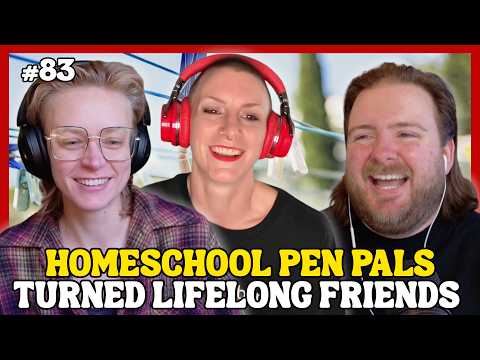
This week in the Ex-Homeschoolers Club, I sit down with Candice, host of the Open Wounds Podcast, to talk through her experience growing up homeschooled in 1980s and 1990s Florida. Candice shares what it was like to teach herself out of yard-sale workbooks in a chaotic, high-control religious household, why she pushed to earn her GED at 16, and the massive culture shock she faced walking into a community college classroom at 23 without knowing what an essay or bibliography was. Together, we unpack the intersection of trauma and learning, why she believes children deserve a voice in their education, and her perspective as a parent and social worker advocating for basic homeschooling oversight to protect vulnerable kids.
*Check Out Candice's Podcast (Open Wounds)* • Open Wounds Podcast (YouTube): @openwoundspodcast-o3g • Open Wounds Podcast (Spotify): https://open.spotify.com/show/183a7jiSqGpP2nImmJgE2v?si=dea9628b31db408e • Open Wounds Podcast Email: [email protected]
*Resources Mentioned* • Coalition for Responsible Home Education (CRHE): https://crhe.org/
*Support the Show* • BuyMeACoffee: https://buymeacoffee.com/exhsclub • Subscribe on Patreon: https://www.patreon.com/cw/exhsclub • Check out our Substack: https://exhsclub.substack.com • Email Newsletter: https://exhsclub.beehiiv.com/
*Message Me On Socials* • Email me at [email protected] • Instagram: https://www.instagram.com/exhsclub/ • TikTok: https://www.tiktok.com/@exhsclub • Threads: https://www.threads.com/@exhsclub
*Listen on Podcast Players* • Spotify: https://open.spotify.com/show/1hIhpMeEy6VJuqNUwfz5TE • Apple Podcast: https://podcasts.apple.com/us/podcast/ex-homeschoolers-club/id1641525487 • iHeart: https://www.iheart.com/podcast/269-ex-homeschoolers-club-201877573
*Chapters* 00:00 Welcome to the Ex-Homeschoolers Club 01:18 Candice Homeschool Origins 06:40 Testing and Hidden Gaps 12:30 Trauma and Dropping Out 15:16 Church Co-ops and Public School Denial 22:36 GED Path and Siblings Catch Up 25:44 Early Adulthood and Bible School 30:32 College Culture Shock 34:42 Deconstruction Through Learning 41:09 Faith Marriage and Hypocrisy 45:29 Deconstruction Lightbulbs 46:26 Outside Perspectives Matter 47:45 Why Kids Need Community 50:29 School As Life Training 52:18 Advocating For Support 55:55 Homeschool Motives And Impact 59:49 Need For Homeschool Oversight 01:07:54 Listening To Kids Voices 01:12:27 Homeschooling Burnout Reality 01:13:40 The Good and Bad of Homeschooling
Read the full transcriptHide the full transcript
- What is good, my ex-homies? It is your boy Jacob Gooden. We are back for another week in the Ex-Homeschoolers Club.
- And like always, I've got a great guest this week, someone who's new to me, um, which is kind of my favorite because I love getting to know new
- people, hearing their experiences. One of the craziest things, I think, is that like within every
- homeschool experience, there's some common thread that we can find. Uh, and it's so … Like, it's so interesting whether it's a piece of
- curriculum or, uh, or an extracurricular or where we grew up or… There's just a whole plethora of stuff that just like it feels familiar, and, uh, it's
- just kind of a … It's a good feeling of that like, "I see you. I see you. You're not alone," uh, kind of thing.
- And so I'm excited this week. Candice is joining us, and Candice, uh, also has a podcast.
- We'll touch on that as well. Um, but yeah. But we're gonna have Candice come in and talk about her homeschool experience.
- Uh, we're gonna talk about the post-homeschool years. We're gonna talk about, you know, parents', uh, uh, parents' rights,
- kids' rights, where we sit with homeschooling today, and we're just gonna have a good time.
- So with that, uh, remember to do all of the internet things that you know how to do: like, subscribe, comment, all that shit.
- And, uh, yeah. But now enough of me talking. Candice, welcome to the Ex-Homeschoolers Club.
- I'm so stoked to have you with me today. Thanks for having me Um, let's, let's kick things off with your homeschool experience.
- Like, give me a little bit of like, I tell like maybe like longer than an elevator pitch, but not quite a novel of
- Okay give me the overview of like what did a day in the life look like for you as a homeschool kid?
- W- How… Were you homeschooled all the way through? Did you have siblings? Were they also homeschooled?
- Like, just kinda paint the picture for us, and we'll start there I was, uh, born and raised in West Palm Beach, Florida.
- So I know, you know, each s- school's homeschool regulations or lack thereof is very d- or each state's, I should say.
- So it was, um, the '80s, I think I started… I would… I think it was 1987, 'cause I was going to be into second grade.
- Like, I had done kindergarten at a private Christian school. My mom was working at the time, um, and my brother was in, like, their daycare.
- And then I did, um, first grade at a public school. And, uh, my mom… We were going to a t- pretty traditional s- church.
- It was a Missionary Alliance church, and so they're pretty denominational. Um, and my mom met this woman, and she really started to be, like, planting
- all these seeds into my mom about, like, "You need to be evangelical. You need to be non-denominational.
- You need to be filled with the Spirit. Your children are at risk of all these harms if you let them go out into public."
- And so that was really the catalyst that moved me and my br- my siblings. I have… I'm the oldest of four.
- I have a, a stepbrother, but he lived with his mom, so, um… Or not a stepbrother, half-brother.
- Um, but so yeah, second grade was where I started. Um, so I was the only one in my sibling group who got to ever experience public
- school and to be able to compare to the rest, um, because then my brother would've
- been just starting, um, kindergarten, and then the others were really little. Um, so yeah, we, we were homeschooled all the way through.
- The State of Florida requires a standardized test every year. And so in April, we would go and do this test, and that was really my mom's
- and dad's measuring stick of w- how things were going, was this annual test. And so, um, when we would pass it, I mean, obviously, it's not, like, super
- rigorous, so it wasn't super difficult for us to pass for the first couple years.
- Um, but yeah, the… As far as curriculum goes, my mom was really like, "Let's do this as cheaply as possible." So she was getting, like,
- hand-me-down curriculum, things she would find at yard sales, things she would find in, like, the bargain bin.
- It was very, very hodgepodge. Um, it was very, like, you know- Like science was just going
- outside and playing with dirt. Like it was, it was this like a very, very Wild West experience.
- And so what happened when my second brother, um, started learning how to read, he was really, really struggling.
- Um, and so basically at that point it pivoted to where all of her attention went to this sibling.
- And so I mean, before that, she wasn't like, we were not at all the people like, "The bell rings at 8:00, and you're all sitting at your desk."
- It was not like that at all. There was a stack of like you had a stack of books, and each sibling had a stack
- of books, and you were just told to go to the stack of books and do your work. And so at first, if I had a question, I could like raise my hand and be like,
- "Mom, I don't understand this." But as the siblings, the younger siblings started to need more attention and there was no support whatsoever.
- I remember 'cause I was like trying to run through things a couple nights ago because
- I knew this, this interview was coming, and I remember I did a spelling worksheet,
- and I was kind of proud of myself, and I wanted her to like look it over. And she was like, "What?
- Why are…" like, "Why are you bothering me with this?" And I was like, "Well, did I get them all right?" And she was like, "The,
- the teacher manual's over there if you wanna check your work." And at that point, I think I was like eight maybe or nine, I really just kind of gave up.
- Like I was like, "Oh, this is what we're doing. It's me teaching me." Even as a little kid, I kind of, I clocked it, right?
- And so At that point, I really had a love for learning, and I still do as an adult.
- I just did stuff that I liked. So it kinda was a little Montessori in that way, where I would avoid the
- stuff that I didn't really enjoy. But there was also a part of me who, because I was blonde and
- the church we were in was… Again, this woman who'd planted all these seeds, we were now in a smaller
- church that was more denominational. It was very, like, um, a lot of people in the church were also
- homeschooling, and the… It was just not a super healthy environment. Um, so I got bullied a lot for being, like, a dumb blonde.
- I know that was, like, a thing back in the '90s people would make jokes about. And so there was a part of me that wanted to, like, prove everybody wrong.
- So I would do the work on my own just to try to reinforce, like, "I'm not an idiot. I'm not an idiot," right?
- And so, um, but yeah, back to the standardized tests. It's, it's really interesting because I get so much flack from people who are
- homeschooling or don't have a lot of experience with homeschooling, the parents or the people who've never done it.
- "Oh, homeschooled kids are so intelligent, they're so advanced," blah, blah, blah, blah.
- So my homeschool score when I would do it, my reading would be way advanced. I really liked reading, and I was naturally really good at it.
- And so it would show I was, like, at a 12th grade level. So when my mom would be out and about, "Oh yeah, Candice is at a 12th grade level,
- and Ian does this, and Logan does that." And I'm like, "That's not at all the whole picture." Like, not whatsoever.
- And so you can cherry-pick and make it seem like your kid's doing so awesome. Um, but, like, even as a parent now with my own kids, my one son's really
- naturally talented at math, and he's a little advanced at it, and my other son is really great with reading.
- So of course I could sit there and brag on them, but that's not, like, the whole of the truth, right?
- you really painted a, a great picture to kind of l- leapfrog of. I also went to public school for kindergarten, or well, I, I went to,
- like, a Christian kindergarten and public grade or something like that as Mm-hmm.
- So you, you were saying that, and I was like, Yeah. Yes, exactly the Yes my sister is also slightly younger, and so second grade
- going in, she was in kindergarten. And so y- very similar of just that, like, I had that experience.
- There was a little bit of… I, I was thinking about this a couple weeks ago, of just there was a little bit of this, like, grief for a while, ' cause
- Mm-hmm. seeing my friends every day. And then all of a Yeah not seeing my friends every day and,
- Yeah And so, um, and then similar to you too, my p- my, my mom, it was a little bit of a hodgepodge.
- I think she definitely built… She bought some full curriculums, uh, Mm-hmm. the, the go, 'cause she, she knew.
- She was like, "I, I don't know what I'm doing. Like, just kind Yeah take a stab at something, and then we'll kind of go off of there."
- But it changed over, over years. It, Mm-hmm out what, what was working for people and what didn't and things like that.
- But also to your point, it's so crazy that Florida has standardized testing every year.
- I grew up in California w- Mmm. no standardized testing. Ah ouais. of paperwork once.
- You get, like, a one-week window. You submit a piece of paper, and it is up to your parent to,
- like, test you if they want to. And so I Oh, wow of standardized testing things, but it was not every year.
- And, um, I'm amazed that am as smart as I am, Yeah. sometimes. Yeah but yeah, that's, that's fascinating.
- I- did that, like, did the, did doing testing every year potentially help you in the sense of also give you some, like, over knowing,
- "Okay, I'm kind of at this point"? Because something that, like, I k- I know I struggled with this particularly in
- junior high and high school, was, like, not really 100% certain that I was smart.
- Like, Yeah could guess that I was, and I, and I trusted my mom. My mom did a good job of r- she wanted us to go to college, and so she was
- trying to keep us on track for that. But, but there was that question in the back of my mind of, "Am I
- actually smart?" Because nobody, no third party is checking me on that. And so I'm curious, since you actually were doing testing every year, were
- you able to see those scores, and were you able to then say, "Okay," like, "I'm not dumb," or, like, "I'm…" You know, were you able
- to use that information in any way? Yeah, so I, because we took the test in April, the, like basically
- from January on, my mom would be like, "You actually have to do something." You know what I mean?
- So I do, Right do advocate that states implement that. It's a really good tool, and I think all the states should be using it.
- It's not super invasive. The testing can be done at a testing center or whatever.
- Um, like we would go while that school was on spring break, and we would use like their little cafeteria.
- Um, but I did like that it did give me some kind of mile marker. Like, okay, I'm a little behind in math.
- Maybe I should, should… And it would even break down like multiplication or division or whatever the subcategories that they tested you
- on, where you were struggling in. So I found that helpful. Um, the other thing that I think was, was good and bad about that was, you
- know- It, it did put some pressure on you, like, "Oh, you, you are gonna… Somebody's looking at this," right?
- Like, and, um, somebody had told my mom, and I don't… Now that I see what the system is, I don't think anybody would've ever done anything.
- Like, it would've had to be so severe to, for the state to step in. But in theory, if your kid was not showing progress year over year, you didn't
- even actually have to maintain the grade level, you just had to show progress, which is very, very vague, right?
- And so, um, my mom had that kind of urgency of like they need to be showing progress, which I think was really, really good, um, for her as the teacher.
- My mom dropped out of high school. I don't, I don't think my dad finished high school either, and so you have
- people who have like no point of reference for what college is and what higher education is, teaching kids, and so it was really, really chaotic.
- Um, but I do appreciate that Florida did that. And then when I was 13, I just quit taking them, and I don't know if it's because
- the state only required it till eighth grade or if my mom signed some form. I don't remember why.
- I just remember that the coursework was getting so hard that my mom couldn't help me and I couldn't get through it myself, specifically with like algebra.
- So she hired a tutor, and it kinda sorta helped me a little bit, but it wasn't really, wasn't really working.
- And the other thing I'll note here too is, um, what I realize now looking back, like
- hindsight's 20/20, when my son was in high school and we were working through his
- like geometry and trigonometry and stuff and we were using Khan Academy, I was able
- to grasp the concepts finally that I had really struggled with for a long time. And now that I know what I know about nervous system regulation and trauma and
- activation of fight or flight, because my home life was so chaotic and so traumatic,
- like my parents were constantly fighting, there was a bunch of like domestic violence and stuff happening between them, and then we would go to church and
- pretend like everything's fine on Sunday. And so, Ja um, my brain had a really hard time processing information
- and retaining it because I was constantly hypervigilant, right? And so, Right that's part of this, this too is with homeschooling is
- like the home environment. Like, a lotta kids will have anxiety going into the school environment,
- and there's bullies and there's all these other factors, um, which parents can advocate for their kid about.
- But when you're in the home environment, like that's it. Like, there's nobody coming in to help you course correct.
- You as the parent are the be all, end all in noticing and recognizing what's going on with your kid and, and fixing it.
- And so, um, yeah, there, there was, at eighth grade is when I stopped the standardized testing, and I basically like dropped out after that.
- Like, um- I did end up, because I was really motivated and I was like, "I don't know if I can get a job without a high school diploma." Like, the
- joke is even McDonald's won't hire you without a high school diploma. And I'd been working at, like, the mall or little… I'd been babysitting.
- That was the other thing, too. Like, because I was homeschooled and these people in our church were like,
- "Hey, I need a free, cheap babysitter," I would be working a 40-hour shift as a nanny at 12, 13 years old.
- I was in other people's houses taking care of their kids for them. And so yeah, I'd bring a book to kind of front that I was doing
- something, but I wasn't doing anything. And so, um, when I was about 15, I asked my mom, I said, "I wanna get my GED
- because I wanna have at least something." And I had no point of reference. I didn't know how to get a high school diploma.
- I didn't know how, and she didn't know how, and she wasn't trying to figure it out.
- And so me taking the initiative, I applied at 15 and they said, "No, you're too young.
- You can't take it." So then I waited another year and I applied at 16 and they let me take it.
- And I did buy, like, the GED prep book, and I studied it, and I was able to pass
- the first go 'round, which was lucky. But, um, yeah, it, it was just kind of all over the place really.
- well, and I was gonna ask you about, 'cause you had mentioned, you know, transitioning to a different church and you were around more homeschool families,
- and so, and then you brought up the nanny thing and, and working in those types of environments of, like, you know, I get this… I, I've had this comment a
- couple times from people about, like, you know, a lot of people come on and they talk about, you know, religion and homeschool go very hand-in-hand.
- And then also, like, mom and dad play, you know, and, and their personalities and whatever issues they have also, like, is also this thing.
- And so some people will say, "Well, you're not really traumatized from homeschool.
- You're traumatized from religion, or you're traumatized from your parents or whatever." And I'm like, it all ties
- It's a spider web. Yeah. And Yeah hard to separate the two. And, and some people can separate them, but, like, but I was gonna ask you,
- like, how closely those things were tied. I mean, you mentioned your mom was heavily influenced by
- church to start homeschooling. But then as you enter into a church that now has more homeschool families, are
- they also starting to play any type of impact on how you guys are, are acting? Does it h- does it help?
- Does it hinder? Like, is there a community Yeah. still So she joined a co-op, but it was basically for, like, field
- trips and extracurriculars. So we would go to, like, the zoo with the other homeschoolers,
- or if there was a play that was appropriate, we would go see the play. Um, it wasn't super, um… I don't know.
- It wasn't like we were all meeting together at a picnic table in the park to do math.
- It wasn't something like that that I see people do now with a true co-op, where you're getting taught by other people's moms or dads.
- It, it was just, like, a something for her to connect with other parents with. Um, but I, w- we were in 4-H Club, and our 4-H Club was all homeschoolers.
- And so what happened, um, this ties into me around that 13, 14-year-old age. A lot of the kids who were homeschooled around… They finished
- out the eighth grade, and then they would go into high school. Like, I would say 95% of the people that we were homeschooling with followed
- that trajectory, I think that's actually school either public or private high school.
- And I actually asked my mom at 13, "Can I please go to the private Christian academy?"
- And she thought about it for a week or two, and talked to my dad, and she came back and she said, "Well, if we send you, then we have to send your
- siblings, and we can't afford it," which wasn't necessarily true, because we would've qualified for, like, the income assistance, because there was four kids
- and my parents weren't making that much money, but she didn't even really try. Um, so then I came back because I was really like, "I'm getting left behind.
- Everybody I know is going to school, and I'm already struggling and I, I need help
- with my work." I knew that this was, like, a linchpin kind of turning point moment.
- And so I said, "Well, can I go to public school in my grandma's district?" 'Cause the district we were in was not the greatest.
- And so I said, "We'll use Grandma's address, and I can go to Grandma's high school." And so again, she kind of muddled it through and she's like, "Well,
- I don't want to drive you across town every day to go to her school." And I said, "Well, can I live with Grandma?"
- Because one of my other cousins was already living with Grandma, and she's like, "Absolutely not. Grandma will let you become a heathen, and you'll
- be exposed to demonic things and blah, blah, blah, blah." So that was a… That's another thing when we're talking about kids' rights versus parents'
- rights versus children's right… I believe if your child asks you, "Please, may I go back to school?"
- Like, that's a valid request. It wasn't like I was, like, a little tiny five, four-year-old going, "I
- wanna go back to school." I mean, which I still, as a parent, would listen to that kid voicing that, why, you know, they wanna go back to school.
- I need to at least have a conversation with them about why they wanna go back to school, and what is they feel they're missing from school.
- Because I can look at my brother, Ian, um, and he was very… He has a big personality.
- He's very social. He's very outgoing. And so him not being in school was quite detriment- detrimental
- to him, like, socially. Like, he really needed to be around other kids and have fun and laugh and
- sing- like he liked singing and dancing and theater, and there was so much where I know he would've blossomed if he'd been in a school environment.
- But it wasn't an opportunity he was given. And so yeah, I think that was, that was something that wasn't… My parents
- were so afraid, they were so trapped in like, "My kid's gonna do drugs and have sex and go off the rails if I let them go to school," kind of thing.
- Um, and it really, it made me very, very resentful for a long, long time. Like, I had to do a ton of work processing that because, um, I felt robbed.
- I felt robbed of something that I should have had access to. Like, because my parents had never gone to college, they viewed me as just a woman
- who needs to get married and make babies and serve her husband in the church. And so the college was never discussed.
- Like, what are credits? How do you write an essay? What is a bibliography? Like, all these things I had to learn on my own when I put myself in college.
- Um, and we can talk about that too, but yeah, it was, it was a trajectory where like the vast majority of, of the kids that were in this homeschool pipeline with
- us at ninth grade went into a traditional school setting of some type, if it was Christian or private or whatever.
- Um, and the ones who stayed back with me, we just got jobs at like Papa John's Pizza and f*cked around all day.
- Like, we weren't doing anything. Like, Yeah. It, it's so interesting to see also the… So, like, both of my parents are college
- educated, and so that was always something that even from a very young age my parents
- were kind of saying, "Hey, like, you know, this is kinda how life goes, right? You're gonna, you're gonna be a kid, and then, you know, high school, you're
- gonna start driving, and you're gonna start… You know, you're make- you're gonna make some serious friends at that point, and then you'll be, you
- know, when you turn 18 you're an adult now, and then you're gonna launch. And, you know, and so maybe you get a job, or maybe you go to college, or,
- you know, there's all these options. Or you go into the trades or, you know, whatever." And so, like, I had these
- people in my life doing that, and I always thought it was really weird when I started to meet more homeschool kids whose parents maybe just had high
- school diplomas or, like your parents, had dropped out of high school, right? And so, and their parents were not setting them up in that same way of
- even just kind of indicating that this is what normal life kinda looks like. It's just kind of the stepping stones, right, that get you into adulthood.
- And it was so crazy, because a lot of my friends were surprised when I was taking
- college so seriously and taking SATs and getting, you know, writing the essays and
- doing everything I needed to do to collect myself to be ready to apply for colleges.
- And they're like, "Why are you doing this?" And I'm like, "Why are you not doing this?
- Like, this is the Yeah, This is the yeah. Yeah And it, it's for the, for the reason you said.
- They didn't know that that's what was next. Like, your mom didn't even know, hey, this is how we go get a GED.
- You know, that took you really leading that charge to go say, "Okay, let's find this information. How do we find this information? Where does it exist?"
- I mean, now we have the internet, and that's know, a huge blessing, a huge help.
- Um, Mm-hmm you know, uh, so I'm curious, like, how did… I wanna get into the GED stuff, and then I wanna get into, like, into adulthood.
- But, like, how did you find information about getting your GED and, like, getting that stuff?
- 'Cause that is a huge accomplishment in and of itself. Yeah, so one of the other homeschool kids in our church, he was a couple years older
- than me, and he was trying to get a job, and they were like, "Dude, you need to go get a GED." So, somebody had pointed him to, like, the local county office.
- And so I was at church, and I was like, "How'd you do it? Where'd you go? Who'd you talk to?" And I got the phone number or something from him.
- F- unfortunately for him, he failed the first time, and he had to, like, retake it.
- Um, which is sad because I was told the GED's academic equivalent is eighth grade.
- And so I was like, "Oi, the fact that he couldn't pass it the first time, it really says something."
- Um, but then, so for example, so I navigated that on my own. My family, when I turned, you know, like 19 and I'd left and I'd gone out of state
- and they moved, um, to Oklahoma as well. And so at this point, because my mom was like, "Oh, Oklahoma's
- the Bible Belt, everybody here is Christian. The schools aren't gonna have all this horrible stuff."
- And it's true, like there aren't as… There's not gang activity. There's, I mean, there's other problems that Oklahoma faces, but it wasn't
- as like, you know, sketchy as the school my siblings would've gone to. So she went to put all my three siblings in school at this point in time.
- So my brother Ian would've been going into, like, his sophomore or junior year of high school, and then Logan and Christina were going into,
- like, elementary and middle school. So the schools there, with them coming from homeschool, did, uh, a placement
- test on them, and Logan was a little bit behind, but they're like, "We think we can make it up." Christina was fine, and then Ian was so far behind they
- wanted to start him in eighth grade. And it was just shattering for Ian because he had all these dreams of
- like, "I'm finally gonna get to go to high school, and I'm gonna get to be part of this thing and have friends and go to prom and homecoming."
- And he was like, "I can't be like 16 going into eighth grade. That's so weird." So then he had to go to, Oklahoma has like a night school thing, program
- for adults who wanna get their diploma, like say if they dropped out or they're from another country or something.
- So he went to these GED classes that he found through the county. At this point, my, the school pointed my mom in this direction
- in Oklahoma, so that's how they got the information for that. Um, and then he ended up getting his GED that way.
- But yeah, I think, um, the whole GED thing… I mean, even, even some of the homeschoolers I know today, their parents don't let them have
- online access because they're so afraid of like, what are they gonna see online, and it could be terrible.
- And so yeah, even though things are readily available online doesn't mean that people know how to find them.
- It still takes work. It's not… Yeah. It, it seems as easy as typing in a Google Chat, but it's not,
- Yeah. Quite that easy. So, so then what does early adulthood look like for you? Because, okay, we've, we've got a GED now.
- Are we, are we just working? Are we thinking college is on the horizon? Like, where, where are you sitting and how are you kind of, um…
- 'Cause I, 'cause I'm also imagining there's a little bit of grief. You talked about kind of feeling robbed of some of, like, high school
- and, and schooling in general. And so, like, are you dealing with that grief at this point too, or is
- that something that's coming later? so I was like 16 and I'm working. I mean, I, I, I had been babysitting and nannying, and then I realized like,
- oh, I would… I did the math and I'm like, "I would make more money doing a minimum wage job at the mall. Like, why am I babysitting these people's kids?"
- And so I went and got a job at the mall. And so that was fine for a while. Um, and then because of the religious environment we were in, uh, the goal
- was to like get married, have kids, and support your husband in ministry. Like, that was my only life purpose at that point.
- And so, um, there wasn't anyone like at the local church where I was like, "Oh yeah, I wanna marry this person."
- Like, it was very, I don't know. I was, I think I had I, I had some sort of self like internal thing that was like,
- "Do not, don't do this right now," like a little tiny voice in the back of my head.
- And so I ended up talking to the pastors and the youth pastors of like, "I wanna do something." I had a very big, um, like, like a heart
- for poor people, and those people in poverty, and people suffering, and like missions work and stuff like that.
- So they're like, "Oh, well, if you wanna like learn more about that, and basically
- find a husband who's doing that, go to, um, these Bible schools in Oklahoma." One of them was, um, DeMotta Missionary School, which I think is defunct now.
- It was running through some smaller church. And then Rhema Bible Training Center, which a lot of people
- go from all around the world to Rhema, Rhema Bible Training Center. It is not accredited.
- It costs as much as an accredited college. I paid for it out of my pocket, and I wish I hadn't uh, because I ended
- up getting student loans later for my college, and I was like, "Dang, if I had just paid for it like I did Rhema." But anyway, so I went there for two years.
- Again, I didn't meet anybody there. I w- I think part, the, the tiny feminist inside of me was like, "This is b*llshit.
- I'm not doing this." 'Cause I would meet these guys and they're like, "Yeah, you're
- gonna submit, and we're gonna go where God wants me to go." And I'm like, "Well,
- what if God is telling me to go somewhere else, and I'm supposed to go here, and
- you're saying we're supposed to go here? W- well, how, who's right and who's wrong?" And they were just kinda like,
- "Ugh." And so, um, I ended up meeting my husband 'cause I was waiting tables. But kind of back to like the, the shell shock of being so hyper protected, like
- I, my literal only socialization was church and this 4H club, which were all Christians and were mostly homeschooled.
- Church, there was a little bit of like, you'd get the random kid who was from public school saying something, but the youth pastor would be like,
- "Don't say that." Like, you know. So once I started working retail and food service, I was just like- But they
- were like, they would pick on me because they would get such a strong reaction out of me making a s- an innuendo or a joke about drugs, where I would, like,
- turn white and blush and all this stuff. And they were like, "Oh, this is the fun thing. Let's torture
- Candice by saying horrible th- like, naughty things to her," right? And so there was a huge, like, period of adjustment where I just
- felt, like, totally blindsided by things that are actually very normal and developmentally appropriate for teenagers and young adults.
- And so I moved to Oklahoma. I enroll in this missionary school. Again, it's still very sheltered.
- It's, it's all Christians, and they're all wanting to be pastors and missionaries.
- And then I'm meeting people that I'm waiting tables with, which are still… They go to, like, O- you know, OU or t- TU or these,
- these regular colleges in Oklahoma. And so again, I'm starting to hear from them, like, what their experience is like.
- And so then I go through Rhema, and I do the two years, and while I'm there, I meet my husband, who is not involved with the church, and the
- church was like, "Do not marry him. You're unequally yoked." But I was like, you know, "I'm g-
- I'm gonna do me at this point." Um, but so yeah, it was after we were married and we had a kid, 'cause
- I still, there was still so much ingrained in me that your purpose as a female is to marry and reproduce.
- Like, that's what God put you here for. And so I was married, I had a kid right out the gate, I was working
- retail, and I was so unfulfilled. Like, to the point where I would, like, cry my drive home because I
- was like, "Is this all there is? I don't wanna work at this department store, and I don't feel like I'm
- helping anybody." So, um, I remember I was driving on the highway and I saw the community college, and I was like, "I need to, I need to do this."
- And so I was, like, 23 at this point, and I went in, I just marched my little butt into the admin office and I'm like, "What do I do?
- How do I do this?" And so it was h- it was awkward because they're like, "What do you mean, how do you do this?" And I'm like, "How do I
- college?" And they were like… They're like, "Go talk to Susan over there." And so every single person I would run into, they would look at me like I fell
- off the turnip truck, like, "What are you talking about?" I'm like, "I don't know what to do." So I finally found a couple of people who were willing to,
- like, hold my hand and give me really, um… But that was kind of the theme of me in community college, was me being totally at a loss for what was
- happening, totally out of the loop, on the wrong page nine times out of 10. I had to take remedial courses, which don't count towards your
- degree, and they cost you money. And so then once I figured out… I guess there was a, there was a point in time,
- I can't remember if I had to have been enrolled for so long or I had to meet an age threshold, where I could basically sign a waiver that says, "I know I'm
- not educationally ready to take these courses, but I'm gonna do it anyway." So I took a couple remedials and I was like, "I, this is just a waste
- of my time." And so I just jumped feet first, head first, whatever you wanna call it, into the coursework.
- But even then, I wasn't used to that rigor, like, of five courses. I tried to take five courses and I was completely, like, drowning.
- Like, I couldn't do it. So I scaled back and I would take, like, two or three at a time.
- And so I would balance, like, I would pick a hard one, like a math or a science,
- with an easier one that was, like, a little bit more, um, tolerable for me. And so it took me forever to get my bachelor's degree.
- I moved from the community college to, um, the, the regular state college, one of the, the smaller ones.
- And I had to take a placement test at the community college too, so they could figure out what to do with me.
- They're like, "Well, you have a GED and you're homeschooled and you have no credits, and you've got nothing to prove that you did anything, basically." So, um,
- yeah, it was… Like, I remember calling my friend up and I'm like, "The, the professor said we have to write an essay.
- What's an essay?" And she was like, "You don't know what an essay is?" And I'm like, "No, I literally don't know what an essay is." And so I remember dragging
- my papers into, like, the, um- They had like a, a room where other college students who were a little bit more advanced would come, and you could ask
- them for help in the library or something. Kinda like And but it was kinda like tutoring.
- Yeah, and so I would bring my papers in there, and I'd be like, "I don't know why I keep getting Ds.
- What's wrong with this paper?" And they'd be like, "Well, your sentence structure is wrong." And I was like, "What is sentence structure?" Like,
- they were looking at me like, "How, how stupid are you that you don't get this?"
- And I'm like, "You might as well be speaking Greek to me. I don't know what, you know, verb tense and all these other things are, and how you
- make a sentence appropriate." I mean, spelling was a struggle for me, too. And so, um, they would just be like, "Well, go a- and find all these things in
- the paper." And I'm like, "What things? You need to show…" Like, it was literally like, "Show me in the
- sentence what you are talking about. Explain to me why it's wrong." And so they were like, "Oh, geez."
- So I ended up finding a class. Somebody w- I think recommended me like, "I think you should take this class where
- she literally breaks down how to write." And so, um, yeah. That was, that was how I fumbled through.
- I was really, really, um… But once I got into college and I started learning, I was so lit up by it.
- I was so excited by it. I remember telling one of my friends, like, "I wish I could go to college
- for forever 'cause I just love being in there, and I just love learning, and I love the debates, and I love, like, figuring stuff out and having my
- paradigm shift over and over again." I remember I took, at the community college, they had electives like
- New Testament and Old Testament. I was like, "I'm gonna take this this week. Cakewalk.
- I'm gonna get an A." I, my shit was rocked, let me tell you, because they're like, "Did you know that all these things that are in the Bible
- were in these other texts before, that existed before the Bible?" And I was like … Like, I seriously… It was, that, I, college se- was part
- of my deconstruction because I started, like, I was brought up that the Bible was literal, factual, historical, accurate, and that everything you
- were to believe it is 100% true. And then I'm like, "Wait, this, the story of Moses or the story of this or
- the story of that was in another thing that was existed in another culture that wasn't from the Israelis or the Hebrews?
- It was Egypt?" And I was just like, it was, it was very mind-blowing. and it, and the science professor being like, "We're gonna talk about evolution
- today." And I was like, "Oh, great." You're like, "No." and I went to a c- I also went to a Christian college, uh, not
- a seminary college, but I d- I went to a Christian college. So also, the sole reason of there's also a safety with that, of like
- we're all gonna agree anyways 'cause we're all Christians, everyone who's That's true.
- kind of a deal. Not true. Uh, there was a, one, there was… I was, like, shocked by some
- of the stuff that was going on. Um, but it was, but it was crazy to sit in this class and him be like, "Okay,
- we're gonna talk about evolution today. And okay, so you know, who believes in the literal version
- of the beginning of the world? And it's like seven days, you know, six days and God rests on the seventh."
- And, and you know, my hand goes up and I'm like, "Hell yeah, that's, that's exactly what I believe." And he's like, "Okay, well, let's talk
- about these other versions of, like, could it be a parable or some kind of, you know, just a more beautiful telling of evolution taking place over
- millions and millions of years, right? And you know, but we condense it down to, to be more just these days or
- whatever." And, and I'm like, even thought of that. Okay, now I gotta go, like, look into that," right?
- And you know, and then, and then the next one is like, well, what if just evolution is just real, right?
- And this is just in the same way that we used to think that the whole universe revolved around the Earth, and then we figured out
- that it revolves around the Sun. Like, could we just have been wrong when they wrote the Bible, that we didn't know
- how things began, so we just wrote it? In the same way that when, you know, Greek mythology was written, this is
- what they wrote that the beginning of the world was like, and… they didn't know, they just made it up, right?
- And I'm like, sitting there, my mind is blown, right? And I'm like, Yeah feeling probably like you, rocked to my core that, I
- believed a lie this whole time? Like, what is, what is this thing? And then fighting to kind of on to it, but also, like, adding all these new pieces of
- information that are just changing the way everything I've ever believed a hun- to be
- 100% true, to be, be, to never be a lie, of a sudden is rocking, rocking my shit.
- Like you said, Yeah. Yeah. Yeah, it was, it was definitely a awakening, and the more… Because I
- ended up getting… 'Cause I still had that compassion of like, I wanna help people, I want to make a difference, I wanna help people who are suffering.
- So I was teetering on do I wanna go into elementary education or psychology, and
- I really liked the psychology courses. So I ended up, um, going into psychology, and because the university I was at,
- um, I wanted to get a minor in science 'cause I really, really liked science. Once I started learning about biology, um, I found it very fascinating.
- But the way the campus was structured, all the science classes were over here, and all the s- the psych and social classes were over here, and to get…
- You would li- I would've literally had to like sprint across the campus and be five minutes late constantly, and I was like, "This is crazy." So I just
- minored in sociology, and that was, again, all these, um, belief systems that my parents and the church had taught me about like abortion, and the government,
- and so- and like chi- um, like, um, food stamps, and these social systems. Um, I started to like get a whole new understanding of them, and it was
- just, it was just like awakening after awakening after awakening for me. I still, at that point, was like going to church and participating.
- I remember I was going on mission trips with a group from one of the churches, and they were like, "So what are you gonna do when you get out of college?"
- I was like, "I'd really like to come work for your organization." And they were like, "Ha ha," and you know, it never went anywhere.
- But, um, yeah, I, I think the other struggle, because I had gone through Rhema and I had done the children's ministry program at, at… This
- was before I ended up in college. Um, I had looked at getting a job as a children's minister, like for a church.
- Like, and they don't pay you. They don't pay you anything. Or they pay you like $10,000 a year for 40 to 80 hours worth of work.
- And I was like, "This is crazy. Like, this is what God wants me to do, is just be in poverty? Like, I have to feed my child." Like, yes, my husband worked,
- but he's not like an investment banker. We needed dual income. And so, um, yeah, I think it was just this, this culmination of like everything
- I'd been told wasn't coming true. Like, I couldn't get people to donate money for my missions trips, and I'm
- like, "God, you told me I should go on these missions trips, but there's no money to pay for them," and I was putting it on credit cards and going in debt.
- And then I can't get a job as a children's minister because they don't actually pay you.
- It's, it's a volunteer position. Um, so it was all these things happening where the entire foundation of what
- I had been raised on became like… I couldn't, I couldn't believe it anymore. There was nothing left to believe in, sort of.
- So yeah, as far as like, um, go- keeping it back with the homeschool thing, the college process for me was really great.
- I decided not to go on and get a master's degree just because I had so much student loans at that point.
- I had to get student loans for my, my ba- my associate's and my bachelor's, and so I didn't want to rack up more student loans to get a master's in social work.
- And I also was looking at the pay scales. Like, you get maybe a 10 to $20,000 bump in going from a bachelor's to a
- master's, and I was like, "That's not worth it for me to go and double the amount of debt I have now." So I just went and did social work for a decade
- Okay. It, before… I, I wanna get into your career at that point, but before I do that, I did wanna ask, was your husband also religious, or
- was he from outside of the church? 'Cause you had mentioned that the church was telling you, "Don't marry this guy."
- So he was, he was, um, like had said the salvation prayer at a Baptist church or something one time when he was a little kid, and his mom would
- take him… Like, she was like the Easter/Christmas kind of Christian. Um, she was not like us, where we were there every single time
- the door was open kind of people. Um, so his view of like, "Yeah, Jesus is cool, but it's not the be-all, end-all."
- And he kind of kept it to himself. I think he was like, "You know, she can have her beliefs, whatever those are.
- They don't have to impact me." It did become a thing where I was, like, constantly trying to drag him to church for a while, and he was
- like, "I don't really wanna go." It made him… Because, you know, when we had moved over to the
- non-denominational, the Evangelical church is very boisterous in their services.
- There's a lot of running and dancing and screaming and shouting and people falling on the floor, and that made him very uncomfortable.
- And so, um, we found a, uh, Assemblies of God we went to for a little while, and he was a little bit more comfortable with that.
- But really, he's like, "I'm tired from going to work all week. The last thing I wanna do is get up at 7:00 AM on a Sunday to have to put some fancy
- clothes on and go sit in a room." So, um, I'm sure my parents would think he had a negative influence on me.
- But it was this, this convergence of me seeing all these things, going through college, and having all these confou- conflicting experiences.
- Like, there's no money in the church. I can't, like, feed my child. Like, all these things.
- And then on top of what I was learning in college about how- You know, the church and the colonization and all these things had really caused
- these problems that now as a social worker I'm trying to work to undo. Um, and also, like, as a social worker, you see people who are like, "I need
- my electric bill paid or they're gonna take my kids away," and you call 10 churches and none of them will help.
- Like, there's a lot of, like, in your face, blatant hypocrisy that you're faced with as a social worker where you can just be like, "This is b*llshit. Like,
- you guys say you're here to help the poor and the widow and the orphan. You say that you wanna help your communities, but when the rubber meets the road, it was
- actually the Catholic Church that was the most generous, giving people support."
- And so yeah, my husband had kinda dropped off on going, and then I also started to feel, at some point, like, I had heard through the grapevine
- that, like, I don't know if it was a Methodist church or a Lutheran church, they actually paid the people who worked in the nursery minimum wage.
- And I kinda was like, "I've been getting screwed for decades. I've been doing this for free." And so, 'cause I was teaching, like,
- the little two, three-year-olds, the Sunday school class, and I just started to feel really taken advantage of.
- Like, I was doing everything they told me to do. I was submitting, I was following the rules.
- And then when I asked for support to do missions work or this or that or the, the other, like, I'm talking about 20 years of service to a single
- church, and then when I ask you to donate to a missions trip, you're not, you're not even giving me 50 bucks.
- Like, so there was a lot of these experiences where I'm like, "I just can't buy into it anymore." I, it's not that I don't believe in the teachings of Jesus
- or the sanctity of, you know, faith. It's that the church itself is not living up to the expectations that I had for it.
- And so yeah, um, my husband's, my husband's still very fluid in his beliefs, I would say.
- He's kind of like, "Oh, Jesus is cool and Buddha's cool," and he's kind of like a Universalist in that, but he's not really, like, meditating or he's
- not, like, hardcore into anything. yeah, the, the reason I ask was because think about, like, like my, my
- wife also k- kind of similar to your husband, was a little bit more go to church sometimes, went to Christian school, you know, those kinds of things.
- Um, but, but when it came to a lot of the, like, I was very much in it, like you.
- I'd serve on Sundays, I would stack the chairs, I ran sound, I gave, you know, I was on the worship team, I did all the
- Mm-hmm. help with Sunday school and all those things. Yeah. And, you know, and there's an investment there, and there's very much a, a buying
- in to that process and that system. Mhm so when you, in that deconstruction, there's like, are those days where
- I'm sure it just feels like a light bulb goes off in your head, and you're like, "Holy crap, I didn't understand the system is built on
- this thing," and you're just like, Yeah it, it's, it can be very difficult. And I would, my wife would laugh, and she would be like,
- "Well, yeah, duh." You know? Or she would Yeah. or she'd be like, "What, what is your big hang-up on this thing or whatever?
- It's, like, not Yeah a deal." You know, sex before marriage or, like, you know, d- drugs or,
- you know, whatever it was, just, like, just, like, even talking about those taboo things that had been
- Mmm-hmm. Yeah curse language. We don't u- you know, we don't do all these different things, you know.
- And, and she would be like, "Yeah, what's the deal with that? Why, why you got such a big hang-up on it?" I'm like,
- Mm-hmm. You know? Like, Yeah, yeah there and I'd, and it was just a little bit, like, shocking, you know.
- And the same with the homeschooling thing. She w- she went to more traditional schools, and so for, for her hearing
- some of that stuff that it's like we go through, she's like, "Whoa, that's, that's
- nutso. That's not normal." You know? And, Yeah so it was I don't know if you feel this way.
- I feel this way. Having a partner who kind of is not perfect, you know, has their own and
- issues from life and growing up and things like that, but who can kind of just be like, "Yeah, that's crazy.
- Like, that's weird." Yeah feel like, "Okay, I'm not crazy for thinking this," Yeah
- really easy to, to go there, It is really, and I, aside from my husband, there was a couple of people that
- I would have as coworkers or friends, and I would just give them a, what I thought
- was a funny anecdote from my childhood, and they would be like, "What happened to you?" And I would be like, "Yeah, you know, just this thing." And they were
- like, "That is not cool and not normal." And I would be like, "Oh." And then I'd go to therapy and be like, "The person at
- work told me…" And my therapist would be like, "Mm, it's not really…" Um, but yeah, so it was a lot of reframing.
- It was really good to have somebody, like you said, who had a different perspective.
- He was able to very gently and patiently hold the space for me and have compassion for me without, like, talking to me like I was an idiot.
- Um- And so yeah, I think it… I, and that's the other thing why I just go back to, like, it is so important for kids to have these experiences
- outside of their nuclear family. Because, like, I think about now my own personal belief systems and my own morals
- and ethics, I really want my kids to go and meet people who don't think like I do.
- I want them to have conversations with people who have different religious beliefs and different ethical beliefs and, like, and to have these experiences where
- they can kinda go, "Oh, which would I like to choose? Let me compare and contrast,"
- and process and give them a sense of critical thinking because, you know, when you keep your children in this insulated little bubble, you are controlling
- everything that they're exposed to, right? And so my brother also, God bless him, he was one of the rebels, and
- he would, like, fight, you know, like, kind of sneak, and he'd go talk to people, and he'd get in trouble.
- And there was a period of time, I think my mom and dad spanked him every day for three months, which is a whole nother story in and of itself.
- But yeah, I want my kids to hear voices that aren't mine. I want them to see other races.
- I want them to see other religions. I want them to interact with people who have different personalities and
- different worldviews because I feel like you're doing your kids such a disservice.
- Like, I had this conversation with my friend Rachel where she's like, "I'm so sad my kids are going to school and I'm gonna miss them.
- Maybe I should homeschool them." I was like, "Rachel." I was like, "You honestly are gonna sit here and tell me you can replace every single person
- that's in a school building, from the janitor and the lunch lady to the librarian and the principal?" All those people impact your kid in good and bad
- ways, and they build a worldview that prepares them for life in society, right? And so when you're insulating your kid in this tiny little bubble boy world, and
- they, they will eventually have to go out. That's the thing. Unless you're, you're Amish or something, they will eventually go out.
- And the culture shock and the, like, the thing I experienced when I was in my late teens and early 20s is just blindsiding you, and
- you feel like you're totally lost. And so I really think, you know, even if you are gonna homeschool your
- kid, that exposing them to things is such a big, important part of it, and such a thing that I felt like was lacking in my experience, you know?
- I'm curious when, when you started having your kids and they were getting school age, was homeschooling even something that was on the table of
- you considering that as an option? Or were you like, Absolutely not. I'm Yes. "We're
- Yeah something different"? Well, not only did I have so much… Like, even with my processing and
- therapy and forgiving my parents for their choices that they'd made, I am such a firm believer that school is like a microcosm of adult life.
- You're gonna have teachers that you don't like, just like you're gonna have a boss you don't like.
- You're gonna have a guy sit next to you or a kid sit next to you that annoys you, just like you're gonna have a neighbor that annoys you.
- Like, you, you really learn these foundational things. Like, I remember watching my kid, and it was kind of like vicariously I would be
- like, "Okay, he's going to kindergarten. What's it like? Like , let's like peek behind the curtain." And I was like asking him,
- 'cause, um, he learned how to read when we were at home, like when he was four. He was really good at reading.
- And so we get to kindergarten, I'm like, "What'd you learn today?" And he's like, "Well, we learned to stand in a line and don't hit anybody."
- And I was like, "What?" And so then I'm like, oh, kindergarten is just teaching them social norms.
- It's just teaching them how to get along, how to operate in a community, how to like interact with people in a respectful manner.
- And so there's so many things, like I was thinking about this, like even if you did homeschool like the best way ever, you cannot replicate what happens
- inside of a, a p- a private, public or, you know, charter school building because
- there's so many different moving parts. And so the other thing too, like, you know, I just think it was not
- ever… Like my second son is very much like, "I don't like my teacher. I wanna be homeschooled." And I'm like, "Mm-mm, no." I told him, I was
- like, "It will literally never…" I was like, "Unless the government like closes all the schools and I'm forced to teach you, I will never teach you,"
- just because I feel so strongly that… I mean, I think there are some scenarios in which if your kid is being severely
- bullied or they have a learning disability and the school that you're in is just really under-resourced, I would, I would actually tell you to
- advocate and hold the school to count, take it, which I had to do with my older son 'cause he had autism and we were constantly running into problems.
- So I had to, had to advocate for him to get on an IEP and I had to advocate for him to get special accommodations in the classroom,
- and it ended up me calling the DOE. I went over the principal's head and I was like, "You, by law, are required by
- my tax dollars to provide this education for my kid, and you're gonna do it." And they were like, "Oh, oh, okay," 'cause I was like, "I will
- call Channel 2 Works for You." Like , um, but it was a thing, yeah. So I think instead of opting out because there's something wrong with the school
- district, I would encourage people opt in, get dirty, get your hands in there and
- start holding the school systems that are, you know, you're working with accountable
- for educating because you're not only helping your kid, you're helping every kid that comes after your kid, right?
- Like- There's lessons that you can break ground for. Um, but yeah, I mean, I think about, like, even if you had one-on-one attention
- from your parent, and they're teaching you, and they have a bachelor's degree in education, you're being taught, "I'm the center of attention, and I don't have
- to wait my turn to ask a question, and I get one-on-one attention all day long."
- What, what frame of reference is that for the kid when they have to go out and learn, like, "Oh, I'm not number one everywhere I go, and I do
- have to wait my turn, and I am not the center of the universe," right? So I just think there's so much value in these systems, if it be a charter
- school or a public school or a private school or a co-op or something, that you just, you just can't replicate at home
- Yeah. hearing a lot of needing other people, needing ability to be around those other kids and those… Yeah.
- K- you, Yeah learning the social norms, learning to stand in a line and not hit each other.
- Like, that's important. Those are definitely skills. We all gotta know them at some point, right?
- Um, Yeah, yeah. Yeah And so, yeah. I, I'm with you. And, and as far as, like advocating, I, I had a public school teacher come
- on and talk about, about her job, and talk about one of the, the… You know, teachers wanna work with parents,
- Mm-hmm It's a coming together and working together Bye of against each other. And so working together to make sure kids have the resources they need,
- Mm-hmm. that, yeah, means taking the fight to the school board. It means taking the
- Yeah up the, up the, um, the chain of, of leadership, you know? And Yeah cool to hear that you're doing that for your kids and wanting to stand, you
- know, stand up for them in that way. It's like, I, you know, unfortunately, I, see parents here who drop their
- kids off at school and it's like, that's their time to learn, and then they pick them up and that's,
- Yeah. And that's, Yeah, and I find most teachers, the m- large majority of teachers really want
- to help your kid, and they will kind of pull me aside and be like, "I asked for this, and they told me no." They're like, "But if you go throw a big stink,
- Yes the, the money will suddenly appear to pay for this thing that your kid needs," right?
- And so, um, yeah, that was part of my, the thing I did last in social work, was helping parents navigate, um, the school systems and get IEPs
- and get 504s and advocate for their kids if they needed accommodations or they needed a para or something like that, or they needed, you know, special
- services within the school district. And so, um, yeah, I think it's part of being a community, and it's part
- of caring about… That's the other thing that I have a really hard time with homeschooling, is it's very me, myself, and I centered.
- What's best for me and my kids? And when you pull your kids out, you inevitably harm the local
- public schools because they lose… They are funded per head that's in the classroom.
- They don't just get a lump sum. And so you're defunding the schools by pulling your kids out, and you're
- prioritizing your own kids' well-being above the greater good of your community.
- Um, and so I think that's another thing, too, is like I'm not saying that homeschool should be illegal or that it's never, never appropriate, but I really
- think it shouldn't be people's go-to. And I do see, like even when I was talking to my friend Rachel, I was like, "Is this
- about your emotional need to be around your kids and connect with them? Because is that actually what's best for your kid?" Like, I think so many homeschool
- parents that I've interacted with and talked to, they're homeschooling for them.
- They're not homeschooling because it's what's best for the kid. It's because it's their own anxiety, their own control, their own like, "I want it
- this way, so I'm gonna take my kids and do it this way," versus pulling back big
- picture, looking at the long term, looking at your kid 10, 20 years from now, what
- the homeschooling impact will be on them. And I'm not saying never homeschool or that it's always detrimental,
- but I do think parents really need to take a hard look in the mirror before they make that decision.
- And are they doing it to pacify something internally within themselves, or are they doing it because it's what's actually best?
- And I know this is probably gonna fall on deaf ears, but it is what I see from the outside, so.
- I, I think that's a great point too of, uh, yeah, I've had, I've had friends come on too who talk about, you know, "My parents homeschooled because that's
- what they wanted to do, and they didn't Yeah us as kids when we were… or be able to recognize the signs that
- we as kids needed something more. We Ja you know, we needed additional resources.
- We needed additional whatever," and they were doing it to appease themselves. And, and, and it is tough.
- And I, I'm not a parent, so I don't know the anxiety of sending my kid off to school.
- Yeah. public school system in general, there's a lot of problems there too, you know?
- And that's, Yeah and, and that's why it's important to have voices like yours who are going
- in and saying, "We can do better. Let's do better," Yeah and, you know, that's the only way it's gonna get better,
- Yeah And, um, yeah, that, no, but that's a good point of, like, be- what is the reasoning behind homeschooling?
- Because there are valid reasons to do it, Mm-hmm and then there are some that it's like, is it truly a good enough reason?
- Yeah not. Maybe, maybe, maybe not. Yeah I also rem- try to remind people too that just because you decide
- something for one year doesn't mean that you're stuck in that forever. That's true
- know, uh, for, for, for parents who think about homeschooling and they try it out
- for a year or two, and then they're like, just isn't clicking," or they're just, you
- know… You can go back to public school. You can go to private Yeah same way, if your kid goes to private school and it's not working, you can
- homeschool for a couple years and try to figure it out and try to, you know… Mm-hmm.
- You know, there's, okay. It's okay to change your Yeah, Uh, exactly. It's okay to be flexible.
- at this point, Yeah. having Yeah. and, you know. Mm-hmm. to change your mind. The world does not collapse,
- Yeah of it. And so I'm curious, like, where, like, y- you, you had said, like, you, you know, you don't think that homeschooling should be illegal.
- But, like, where do you stand on kind of the whole homeschooling thing? Like, where, what do you think needs to change?
- What do you think is, is a positive that's come out of it? Like, where do you, what do you, where do you just see it
- in the grand scheme of things? What I've started to find is like, um, as an adult now, I'm kind of like,
- well, why aren't there regulations? Why isn't there federal regulations for homeschooling curriculum?
- Why is there no one… Like, you look at the Turpin kids case, and you're like, literally nobody had an eye on these kids.
- And that's another reason why I advocate for community because if something is wrong, the community can, number one, provide support, but
- they can also act as like a fail-safe. If the kids are being abused or something is, you know, off in the
- house, your neighbor, your teacher, your coach, somebody can kind of be like, "Hey, these kids are not being taken care of. These kids are being harmed
- in some way." Um, so I really would like to see regulations of any kind. Like, seriously.
- There's like… Most of them, I looked in… Once I started going down this rabbit hole of like, why?
- Why do we have no regulations? This is insane. Kids are literally dying, being homeschooled.
- Homeschool is often a shield that parents will use to hide from the government or from the state what they're doing.
- And so I went down the rabbit hole, and I found the HSLDA, which has advocated for ch- decades now to deregulate, to fight any type of
- regulation that comes up in any state. They are backed by a bunch of alt-right attorneys, basically, um, who will just
- go toe-to-toe any time a law just… Even the most minute, like sub- like the standardized tests that we had in Florida, they will fight stuff like that, where
- j- I'm like, that's not even invasive. Like, there's no- no one's coming to your house to do a home study.
- Like, I always try to compare it to, like, if you were to adopt a child, because
- I also did that for a little while in social work, I did the home studies. Do you know what a person who has to adopt a child has to go through?
- The rigor? The standards? Like, they literally will open your medicine cabinets and
- your drawers of your dressers. Like, you have to have a background check, a th- you know, fingerprints.
- Like, and we just let people pull their kids out of school and do whatever they want to them.
- Like, there's some groups that have come up that are like Nazi homeschool groups.
- Like, it's, it can get really, really fringe, and that's my greatest, like, drum that I wanna beat is like, we need to make homeschooling safe for all kids.
- And what I see is there's a, a bunch of parents who are like, "Yeah, go ahead. Go ahead and put these things, and I will gladly comply because I actually
- wanna know how my kid is doing. Or I'm already doing a lot of these things. I'll just show you.
- I'll show you my curriculum. I'll show you the tests my kids are having." But there is this
- weird, large majority of people who are like, "We want no oversight. We want no interference.
- We want to treat our kids as- property basically. And if, in essence, we're looking at this long-held belief that my children belong
- to me and I have governance over them in any way I see fit, which is, in my opinion, immoral to treat your child as if they belong to you as property, right?
- And so there was somebody that said, you know, "Animals have more rights than kids in a lot of states because you can get a felony for animal abuse,
- but parents will beat their kids and abuse them till the cows come home and nothing happens." And so specifically from my own experience, where there was
- a bunch of physical, verbal, emotional, psychological abuse happening in the home,
- there was domestic violence happening in the home, um, and there was like, yeah, my grandma could have called on us, but then she probably would have
- lost the ability to see us, or she would have been asked to take all of us, which
- would have been another thing, right? And so, um, yeah, I just would really like to see individuals come together to
- try to advocate for some more oversight, just if it be standardized testing, if it be like submit that your kid went to the doctor this year, you know,
- just very basic things that any parent would gladly do who loves and cares for their kid, um, because there's just literally, literally nobody clocking
- what's happening with kids right now. I think a big misconception when people hear regulation, specifically homeschool
- regulation, um, is, is that they think we wanna take the rules that apply to public
- school and put them on all homeschooling. And, like, for me personally, that's not what I mean when I say that, and
- No you just described. what I wanna do is sit down and work with home- I, as a homeschool alumni, I wanna work
- Mm-hmm homeschool parents to figure out what are those things, you know, that, that matter.
- And like you're Yeah it a doctor vi- is it, is it requiring a doctor's visit? Is it requiring some kind of standardized testing?
- Is it, you know, what is it? Was it, is it a Right. at the end of the year? Is it
- Yeah and, and work with, together to create something so that cases like yours, you know, cases like a lot of my friends and a lot of people
- who've come on the show before, like, there, there's horrific things have happened to people no oversight.
- And it's like, let's just… Can we mitigate some of that? And I'm not talking to the parents who do homeschooling well, right?
- And who Yeah you know… I tell people I had mostly a positive experience. I had parents who very much cared for us and valued us
- Mm-hmm succeed, like I said. And so they were working towards the requirements and things to get us
- into college and get us to launch as Yeah You know, it wasn't perfect, but it, it was better than most.
- Yeah you know, and so, and even them, talking to them, my parents are very like,
- "Yeah, we can create some new stuff around this." And so I'm talking about new stuff that needs to come in and, and not, not applying existing things.
- And so, um, CRHE does a great Yeah. trying. Yes one of the organizations. I know you and I both know Tess, uh,
- Mm-hmm. Yeah, she's amazing uh, she's awesome, and their whole team is, is super sick.
- And, and so Yeah of the organizations that's doing it. And there's just a lot more, I think, coming out of… There's a lot more
- homeschool alumni coming forward to share their stories because homeschooling has become such a big topic, and it
- Yeah so significantly. It's over doubled since I was a homeschool kid. Uh, Yeah and between the difference of our homeschool times, might've
- doubled in that timeframe Yeah. also. So I think too that's the, the biggest thing I see is this defensiveness
- within homeschooling parents. Like, I'll just make a random comment on some news story, and people will come
- for me in the comments and just fight me. And I'm like, "Your defensiveness is a red flag to me. Like, the fact that
- you want, you know, to have nothing said to you about what happens to your kids in your home is very scary to me."
- And so I would just really encourage people who are going to homeschool their kids, who are homeschooling, listen to these stories.
- Read Educated, read Homeschooled, read, you know, Apocalypse Child. Read all these stories by people who have the lived experience and listen to them.
- Don't just, like, be like, "Oh, you don't know, I'm doing it better than that, and na, na, na, na."
- Like, no, like there's valid, there's valid things you can gain from people who have this lived experience, and I really hope that all of us that have had
- this experience can kind of come together and advocate for the next generations that come behind us because if we don't do it, um, clearly no one has for
- the last, you know, 30, 40, 50 years. And so, yes, the, um, homeschool, the Coalition for Homeschool Reform and
- Education is a really great organization. And, um, yeah, I think, I think there's a lot of work to be done, and we can
- look to other countries to see what they're doing and how they're, they're giving children rights and giving children a voice and making sure that,
- you know, there is at least some ty- type of protections in place for kids Yeah, 100%.
- I think that's the other thing is, yeah, the, the children's rights versus adults' rights.
- We- You and I have kind of hinted at it throughout the whole conversation as well of like, you know, even, even the simple stuff of just hearing a kid
- out of like, is, are things working? How do we, you know, make them better? And, you know, um, listening to them when they say things, you know?
- Yeah I always laugh at the, you know, there's the statement of like, "Kids say the darndest things," right?
- And I'm like, "Yeah, but the, what's the truth The truth inside of it? Yeah And, um, you know, and, and so, you know, it, it's not that it's always
- true, but it's, you know, it take… We gotta dig for it. We gotta w- I used to work at a toy store and interact with kids all the
- time, and I, you know, and sometimes it was like, "Oh, okay, we need to, we gotta explore that a little bit.
- What do Yeah, something's going on here. and it was whatever. And other times Yeah
- " Okay, I gotta tell somebody." You know? And, and so, um, you know, Yeah, I think,
- thing yeah, if your kids are coming to you and saying, "I don't wanna be in school
- anymore," really trying to figure out why is this, that what is happening in your classroom that you're so upset by?
- And then conversely, if you're homeschooling and your kid says, "I wanna go back to school," that's a valid request.
- And to talk through it with them and be like, "Okay, how can we make this work? Is it… Are you needing more social interaction?
- Maybe we can get you in an extracurricular or a club or something like that." Or, "No, you actually feel like your education is lacking and you want
- to go to a more rigorous program." Just listening to the kids is, is so huge, and especially these
- families that tend to have like five, six, you know, sibling groups. It's, it's a lot on a parent, and I wouldn't… Like you said, the, the
- ability to change your mind, send one of them to school if they're asking and don't send the rest.
- Like, you know what I mean? Like, experiment with it. Be fluid with it. Um, I think that's so important as parents to recognize.
- My kid is always like, "I'm gonna grow up and be an attorney and give kids some rights, 'cause we don't have any rights." And I was like, "You're right.
- Kid- kids have, like, no rights." And so, 'cause he's like, "I don't wanna wear my seatbelt.
- I have the right to say no." And I'm like, "You really don't. Sorry." And so yeah, I think it's, um, it's one of those things where listening
- to them when they're sharing and giving them the safety to come to you so that they can talk about what they're feeling.
- Um, if it's like, "I don't like this book that you're having me do." "Okay, well, is it because you have a learning disability in math?
- May- or maybe you need extra support or maybe…" Um, like I, I found with my older son when we went on Khan Academy, I was like, "Oh, I finally
- get it," because the Khan Academy website will explain a problem, and they'll give you four different ways to work through the problem.
- And one of the ways would click, and I would get it. And then so sometimes it's just something like that where you really
- need to take the time to sit with the kid and figure out, how can we solve this problem, you know?
- Um, but yeah, I, I know I… Teachers have so much honor in my mind. They do such hard work.
- They deserve all the accolades because teaching kids is difficult, especially if
- you have, like, different personalities. Like, you can have a really great rapport with one kid, and they'll listen to
- you, and they'll sit down, and they'll do their work, and things will click. And then you can do the exact same thing with the next kid, and
- it's, it's not working at all. So that's why, again, homeschooling is so tricky because you can be really
- good at educating, but this kid's not responding to your approach, and you constantly have to reinvent the wheel.
- So, you know, I think it's, you know, it's a hard job and I don't envy people who choose to do it, so.
- Yeah. My sister and I learn very different ways, and my mom had Mhm. Change curriculums.
- She Ja. everything, and I mean, you know, there's a three-year age gap there, s- I mean,
- that's also, you're jumping between, Mm-hmm very different things at different points, and that, yeah, overwhelming.
- And to your point earlier, yeah, as a, as a parent, can you also take on the role
- of being the janitor, and the lunch lady, Ja and the principal, and all of the teaching?
- And it's, it's a lot. It is a lot. Yeah so I mean, respect to those who choose to do it, um, to do it well,
- but it is, is not an easy job. I don't Yeah, yeah. how tired my mom Mm-hmm. she finished up with us.
- I mean, she did it for 13 years or something crazy like that, Yeah yeah, and she was so exhausted when she was
- Yeah, and took a couple years off. We were yeah. Yeah. Now." Um, Yeah. I mean, we could go down a whole rabbit trail about how the parents… There's no
- reprieve for you as a homeschool parent. You are on 24/7. Like, at least for me, my kid goes to school, I can take 10 minutes,
- 20 minutes, I can do a meditation, I can have a shower alone. As a homeschool parent, it is you are on all the time.
- And acknowledging your own limitations as an adult, like, as a caregiver, do you need a break?
- Do you need to drop them off to a neighbor or a grandma or somebody one day a week so that you can have some downtime and restore your own self?
- You know, that's another topic we could talk about for forever, so Absolutely. Homeschooling requires community.
- I mean, we as humans just, we need community in general. It helps us, and it… And homeschooling especially needs community because
- Mmm-hmm need that ability, like you were saying, to take a moment, to be by themselves, to send the kids somewhere else, to, you know,
- Yeah sometimes take on other people's kids for a little while, you know. Mm-hmm village mentality, we've lost it as a country, and we
- Yeah. for it to come back. And, Absolutely yeah. And as someone who doesn't have kids, I also need a village.
- Uh, Yeah. sucks without it know? exactly Before I let you go, I have a couple questions.
- One is, what is one good thing from your time, that you can take from your time as a homeschooled kid?
- And it could be something very simple and very small. It could be a overall lesson that maybe you've come… You didn't
- realize maybe in the moment, but you've come to realize later on. Uh, I mean, it could literally be, "I did this one workbook," or, "I
- read this one book as a requirement, and that was a fantastic thing." But what is one good thing that came from your time as a homeschooled kid?
- For me, I think it, it created in me a self, um, like an internal motivation, um, because I, I had to be the one opening the book and teaching myself
- the thing and learning and being curious about it and reinforcing it. Um, and that's helped me a lot throughout life is like that curiosity,
- that's internal motivation to get things done and to try things and experiment and fail and try again.
- And so I think that was something, you know, uh, it wasn't great at the time, but it's, it's worked in my favor for the long run
- And as a follow-up to that, if you could snap your fingers, if you could have a wish from the genie in the bottle, what would be one thing
- you'd change about homeschooling? yeah, I, I mean, for me personally, it would've been able to… If I
- had been able to go to school when I asked for it, like if my wishes had been respected, because I do think that I would've been able to
- ease into college more efficiently. There wouldn't have been all these barriers and hiccups
- and drags that I felt. Um, so yeah, I mean, you can't pass a law that says you have to listen to your
- kid when they ask you for something, but if I could wave a magic wand, Yeah. would be it.
- Yeah When you talked about that point of your story, I was like, I feel like that's
- the biggest change, that if Candice could really make a difference, like I clocked
- Yeah. Yeah, yeah. It was, it was huge, yeah Well, thank you so much for coming on, Candice, and being so
- Yeah with us. This has been, this has been awesome. It's been great to, like, explore your story.
- I wanted to also give you the opportunity, you also have a podcast. Uh, it's kind of how we got connected in general, and so it's called Open Wounds.
- Tell people where they can find it, what it's about. Give us the elevator pitch on it
- Yeah, so it's a podcast, uh, focused on complex PTSD and healing. So my goal is to help other people with complex PTSD get some tools and some
- framework on how to manage and how to improve their life and feel like, you know, life's worth living, so to speak.
- Um, I like to interview a lot of people who have stories of trauma and how they've
- worked through them and navigated them, and they can share their experience. Uh, it's on all the streaming platforms.
- We're on YouTube as well at Open Wounds Podcast. And feel free to DM me or, um, email me.
- I think it's at, it's [email protected] if, if somebody wants to email, if they wanna, um… I take guests on all the
- time as well, so if somebody has a story they wanna share about complex trauma or something, yeah, hit me up
- It's a great show. I've, I've… you know, I've dived deep into Yeah. 'cause you and I have worked to- uh, behind the
- Yeah. Yeah Um, and so it's, it's a Thank you great show, and you have some great guests on there, and some, some very
- interesting stories from across the gamut. There's, like, literally everything from, like, you had somebody on talking about
- crypto, and someone came on and talked Yeah. You had Tess. Yeah went on and talked about homeschooling.
- So, like, there's a plethora of topics in there that is great to, like, search through and find something that, like, speaks directly to
- Yeah interests are. So once again, thank you so much for coming on. Yeah this so much.
- And, uh, yeah, let's definitely stay in touch, and who knows? Maybe we'll do a round two, and we can go down one of the other rabbit holes that we
- Yeah, today. All right. Well, thanks for having me Of course. And to the audience, thank you, guys, for sticking around.
- Thank you, guys, for being a fantastic audience. Do all of the internet things you know how to do: like,
- subscribe, comment down below. There's links for all of Candice's stuff. There's links for, uh, other ways that you can support the channel as well.
- Uh, I don't know if we're actively doing book club right now, but if we are, there's also links for that down below as well.
- And, uh, until next time, we'll see ya. Peace.
Brief Summary
Candice recounts how homeschooling in Florida left her unprepared for college, and argues for children’s educational choices and basic homeschool oversight.
Key points
- “It’s me teaching me”. When Candice’s younger siblings needed more attention, she was left to work through her books alone. A spelling worksheet became the moment she understood she was on her own.
- The test scores weren’t the whole story. Candice’s reading scores reached a 12th-grade level, but she says that one strong subject could be used to make homeschooling look more successful than it was overall.
- A child asks to go back to school. At 13, Candice pleaded to attend school because she felt left behind and needed help. Her parents refused, and she argues that children’s requests about their education deserve a real conversation.
- The cost of being kept home. Candice says her parents’ fears about school kept her from opportunities she needed, including social connection and a path toward college. She describes the lasting feeling as being robbed.
- Learning How to College at 23. After years without preparation, Candice walks into a community college and has to ask how college works. She struggles with essays, sentence structure, and remedial courses—but discovers a deep love of learning.
- College Shakes Her Faith. Bible and science classes introduce Candice to ideas that challenge the literal beliefs she grew up with. The experience becomes part of her deconstruction, one mind-blowing realization at a time.
Episode highlights
- “It’s me teaching me”When Candice’s younger siblings needed more attention, she was left to work through her books alone. A spelling worksheet became the moment she understood she was on her own.“It's me teaching me.”5:32Nov 20, 2026
- The test scores weren’t the whole storyCandice’s reading scores reached a 12th-grade level, but she says that one strong subject could be used to make homeschooling look more successful than it was overall.“That's not at all the whole picture.”7:06Nov 20, 2026
- A child asks to go back to schoolAt 13, Candice pleaded to attend school because she felt left behind and needed help. Her parents refused, and she argues that children’s requests about their education deserve a real conversation.“I'm getting left behind.”17:51Nov 20, 2026
- The cost of being kept homeCandice says her parents’ fears about school kept her from opportunities she needed, including social connection and a path toward college. She describes the lasting feeling as being robbed.“I felt robbed.”19:40Nov 20, 2026
- Learning How to College at 23After years without preparation, Candice walks into a community college and has to ask how college works. She struggles with essays, sentence structure, and remedial courses—but discovers a deep love of learning.“How do I college?”30:44Nov 20, 2026
- College Shakes Her FaithBible and science classes introduce Candice to ideas that challenge the literal beliefs she grew up with. The experience becomes part of her deconstruction, one mind-blowing realization at a time.“I believed a lie this whole time?”37:12Nov 20, 2026
- When the church stopped living up to its promisesAfter years of unpaid service and unmet expectations, Candice says she could no longer buy into the church as an institution. Her doubts grew as she saw churches fail to help people in need.“I've been getting screwed for decades.”43:54Nov 20, 2026
- Why kids need voices beyond their parents’Candice wants her children to meet people with different beliefs, races, and worldviews so they can compare perspectives and develop critical thinking. Keeping children in an insulated bubble, she argues, leaves them unp“I want my kids to hear voices that aren't mine.”47:51Nov 20, 2026